-
中文名稱:G6PC2兔多克隆抗體
-
貨號:CSB-PA873624LA01HU
-
規格:¥440
-
圖片:
-
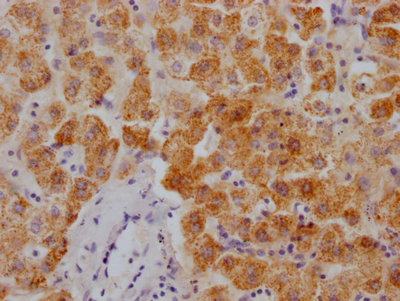
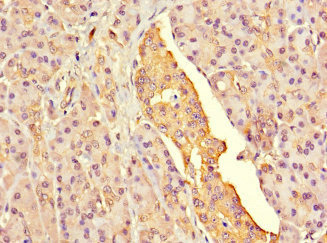 Immunohistochemistry of paraffin-embedded human pancreatic tissue using CSB-PA873624LA01HU at dilution of 1:100
 -
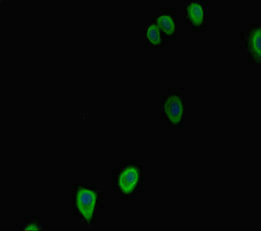 Immunofluorescent analysis of HepG2 cells using CSB-PA873624LA01HU at dilution of 1:100 and Alexa Fluor 488-congugated AffiniPure Goat Anti-Rabbit IgG(H+L)
-
-
其他:
產品詳情
-
產品描述:
The immunization of rabbits with the recombinant human G6PC2 protein (78-115AA) and final purification from rabbit antiserum by protein G causes the creation of the anti-G6PC2 antibody. This G6PC2 antibody is a polyclonal antibody and occurs as an unconjugated IgG. Its purity is 95%+. It is only reactive with human G6PC2 protein, which is present in pancreatic islets and exhibits no phosphohydrolase activity but is a major target of cell-mediated autoimmunity in diabetes. And this anti-G6PC2 antibody can be used to detect the G6PC2 protein in ELISA, IHC, and IF applications.
-
產品名稱:Rabbit anti-Homo sapiens (Human) G6PC2 Polyclonal antibody
-
Uniprot No.:
-
基因名:
-
別名:G6PC2 antibody; IGRPGlucose-6-phosphatase 2 antibody; G-6-Pase 2 antibody; G6Pase 2 antibody; EC 3.1.3.9 antibody; Islet-specific glucose-6-phosphatase catalytic subunit-related protein antibody
-
宿主:Rabbit
-
反應種屬:Human
-
免疫原:Recombinant Human Glucose-6-phosphatase 2 protein (78-115AA)
-
免疫原種屬:Homo sapiens (Human)
-
標記方式:Non-conjugated
本頁面中的產品,G6PC2 Antibody (CSB-PA873624LA01HU),的標記方式是Non-conjugated。對于G6PC2 Antibody,我們還提供其他標記。見下表:
-
克隆類型:Polyclonal
-
抗體亞型:IgG
-
純化方式:>95%, Protein G purified
-
濃度:It differs from different batches. Please contact us to confirm it.
-
保存緩沖液:Preservative: 0.03% Proclin 300
Constituents: 50% Glycerol, 0.01M PBS, PH 7.4 -
產品提供形式:Liquid
-
應用范圍:ELISA, IHC, IF
-
推薦稀釋比:
Application Recommended Dilution IHC 1:20-1:200 IF 1:50-1:200 -
Protocols:
-
儲存條件:Upon receipt, store at -20°C or -80°C. Avoid repeated freeze.
-
貨期:Basically, we can dispatch the products out in 1-3 working days after receiving your orders. Delivery time maybe differs from different purchasing way or location, please kindly consult your local distributors for specific delivery time.
-
用途:For Research Use Only. Not for use in diagnostic or therapeutic procedures.
產品評價

相關產品
靶點詳情
-
功能:May hydrolyze glucose-6-phosphate to glucose in the endoplasmic reticulum. May be responsible for glucose production through glycogenolysis and gluconeogenesis.
-
基因功能參考文獻:
- The results suggest that the GCKR and G6PC2 genes may contribute to the risk of type 2 diabetes independently and/or in an interactive manner in the Han Chinese population. PMID: 30055620
- The variant in TCF7L2 that increases fasting glucose levels increases between-subject variance, whereas variants in GCK and G6PC2 that increase fasting glucose levels decrease between-subject variance. PMID: 28783164
- All three allele variants of G6PC2 (rs560887, rs16856187 and rs573225) are associated with elevated fasting glucose, with two variants (rs560887 in the Caucasians subgroup and rs16856187 under the allele and dominant model) being associated with T2 diabetes as well.[meta-analysis] PMID: 28704540
- these studies identify multiple G6PC2 variants that have the potential to be associated with altered FBG in humans. PMID: 27611587
- Data suggest that islet-specific glucose 6 phosphatase catalytic subunit-related protein (IGRP)-specific CD4(+) helper T (Th) cells play a unique pathogenic role in adult-onset T1D (AT1D). PMID: 26341315
- rs560887 associated with increased fasting glucose levels PMID: 25078492
- we identified coding variants at several GWAS loci which point to the genes underlying these association signals. Importantly, we found that multiple coding variants in G6PC2 result in a loss of protein function and lower fasting glucose levels. PMID: 25625282
- three novel G6PC2 variants were discovered that occur in islets only, leading to protein truncations, frame shifts and neo-sequences prone to immunogenicity. PMID: 24030068
- GCKR rs780094 variant confers high cross-ethnicity risk for the development of T2DM, while significant associations between GCK, MTNR1B and G6PC2 variants and T2DM risk are limited to Caucasians. PMID: 23840762
- polymorphisms in the G6PC2 gene contribute to the association with higher fasting plasma glucose levels PMID: 23508304
- A single nucleotide polymorphism in the beta cell gene G6PC2 may correlate with preserved insulin secretion in type 1 diabetes. PMID: 22438186
- one of the newly identified spontaneously reactive epitopes (P8 [IGRP(55-72)]) is highly conserved between mice and man, suggesting that it might also be a target of HLA-DQ8-restricted T cells in diabetic human subjects PMID: 22983906
- Variation at the rs560887 locus of G6PC2 is associated with worse glycated haemoglobin levels in individuals with GCK mutations; GG homozygotes are more likely to meet diagnostic criteria for diabetes based on HbA(1c) level. PMID: 22486180
- Children and adolescents carrying glucose-raising alleles of G6PC2, MTNR1B, GCK, and GLIS3 also showed reduced beta-cell function, as indicated by homeostasis model assessment of beta-cell function. PMID: 21515849
- The effects of hyperglycemia on insulin secretion override the more subtle effects of genetic variation in the G6PC2 locus on insulin secretion. PMID: 20826583
- Common variants of MTNR1B, G6PC2 and GCK are associated with elevated FPG and impaired insulin secretion, both individually and jointly, suggesting that these risk alleles may precipitate or perpetuate hyperglycemia in predisposed individuals. PMID: 20628598
- Study showed that SNPs from GCK, G6PC2 and MTNR1B modulated the fasting glucose levels in the normoglycaemic population while SNPs from G6PC2 and GCKR was associated with type 2 diabetes. PMID: 20668700
- Potential role linking single nucleotide polymphism in G6PC2 to variations in fasting blood glucose. PMID: 20622168
- Fasting glucose association at G6PC2 is replicable across ethnic groups, although ethnic diversity in the pattern and strength of linkage disequilibrium exists. PMID: 19937311
- results independently confirm the robust association of glucose-6-phosphatase catalytic 2(G6PC2)/rs560887 with fasting plasma glucose levels in non-diabetic non-Hispanic white Americans PMID: 20029179
- IGRP is likely the authentic islet-specific glucose-6-phosphatase catalytic subunit, and selective inhibitors to this molecule can be obtained PMID: 14722102
- Data show that islet-specific glucose-6-phosphatase-related protein is an endoplasmic reticulum membrane glycoprotein, and is degraded through the proteasome pathway that generates the major histocompatibility complex class I-presented peptides. PMID: 15044018
- Alpha mutants containing the beta cell antigen sequence are preferentially degraded in cells, which prevents targeting by pathogenic CD8+ T cells implying that IGRP levels in beta cells could dictate susceptibilities to diabetes. PMID: 16012821
- This study demonstrates the prevalence of CD4+ IGRP-specific T cells not only in subjects with type I diabetes, but also in healthy individuals carrying the DR0301 or DR0401 haplotypes. PMID: 16493034
- Differential tissue expression may aid in designing synthetic peptides for the identification of IGRP-specific autoreactive T cells in patients with type 1 diabetes. PMID: 16520917
- human CD8 T cell clone against this epitope, which confirms that this IGRP epitope is shared across species. PMID: 17376840
- missense mutation in exon 4, L173P, found in glycogen storage disease type Ia PMID: 17607665
- SNP rs560887 was associated with fasting plasma glucose (FPG); it is speculated that G6PC2 regulates FPG by modulating the set point for glucose-stimulated insulin secretion in pancreatic beta cells PMID: 18451265
- Genetic Polymorphisms of the G6PC2 gene may underlie variation in fasting blood glucose levels, and genetic Polymorphisms of the ABCB11 gene may also contribute to such variation. PMID: 18521185
- Data suggest that a group of transcription factors, including MafA and Foxa2, regulate expression of two major autoantigens in type 1 diabetes, including islet-specific glucose-6-phosphatase catalytic subunit-related protein. PMID: 18753309
- rs573225 is a functional cis-regulatory (epi)-single-nucleotide polymorphism (SNP) of G6PC2 associated with glucose-insulin homeostasis in obese children, likely to explain the results of recent genome-wide association studies in nondiabetic adults. PMID: 18984742
- Mutations and single nucleotide polymorphisms in this protein do not conribute to neonatal or early infant type 1 diabetes. PMID: 19238352
- Variations and single-nucleotide polymorphisms are associated in variations in fasting plasma glucose and an increased risk of type 2 diabetes. PMID: 19533084
- The common rs560887 G allele in the G6PC2/ABCB11 locus is associated with increased fasting glycaemia and increased risk of IFG, associations that may be partly related to an increased basal hepatic glucose production rate. PMID: 19669124
- Data suggest that variation in GCK and G6PC2 have additive effects on both fasting glucose and insulin secretion. PMID: 19741163
- SNP rs16856187 was associated with type 2 diabetes and fasting plasma glucose in the Chinese population; carriers of the A allele displayed a higher risk for type 2 diabetes and a lower fasting plasma glucose level in the controls. PMID: 19082990
顯示更多
收起更多
-
亞細胞定位:Endoplasmic reticulum membrane; Multi-pass membrane protein.
-
蛋白家族:Glucose-6-phosphatase family
-
組織特異性:Specifically expressed in pancreas and also detected to a lower extent in testis. Expressed by most islet cells in the pancreas (at protein level).
-
數據庫鏈接:
Most popular with customers
-
-
YWHAB Recombinant Monoclonal Antibody
Applications: ELISA, WB, IHC, IF, FC
Species Reactivity: Human, Mouse, Rat
-
Phospho-YAP1 (S127) Recombinant Monoclonal Antibody
Applications: ELISA, WB, IHC
Species Reactivity: Human
-
-
-
-
-