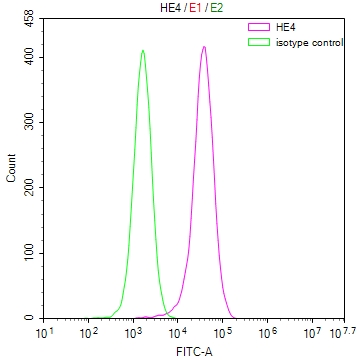
-
中文名稱:PLA2G10兔多克隆抗體, FITC偶聯
-
貨號:CSB-PA018085LC01HU
-
規格:¥880
-
其他:
產品詳情
-
產品名稱:Rabbit anti-Homo sapiens (Human) PLA2G10 Polyclonal antibody
-
Uniprot No.:
-
基因名:
-
別名:Group 10 secretory phospholipase A2 antibody; Group X secretory phospholipase A2 antibody; GX sPLA2 antibody; GXPLA2 antibody; GXSPLA2 antibody; PA2GX_HUMAN antibody; Phosphatidylcholine 2 acylhydrolase GX antibody; Phosphatidylcholine 2-acylhydrolase 10 antibody; Phospholipase A2 group X antibody; PLA2G10 antibody; SPLA2 antibody; sPLA2-X antibody; sPLA2X antibody
-
宿主:Rabbit
-
反應種屬:Human
-
免疫原:Recombinant Human Group 10 secretory phospholipase A2 protein (43-165AA)
-
免疫原種屬:Homo sapiens (Human)
-
標記方式:FITC
-
克隆類型:Polyclonal
-
抗體亞型:IgG
-
純化方式:>95%, Protein G purified
-
濃度:It differs from different batches. Please contact us to confirm it.
-
保存緩沖液:Preservative: 0.03% Proclin 300
Constituents: 50% Glycerol, 0.01M PBS, pH 7.4 -
產品提供形式:Liquid
-
儲存條件:Upon receipt, store at -20°C or -80°C. Avoid repeated freeze.
-
貨期:Basically, we can dispatch the products out in 1-3 working days after receiving your orders. Delivery time maybe differs from different purchasing way or location, please kindly consult your local distributors for specific delivery time.
-
用途:For Research Use Only. Not for use in diagnostic or therapeutic procedures.
產品評價

相關產品
靶點詳情
-
功能:Secretory calcium-dependent phospholipase A2 that primarily targets extracellular phospholipids. Hydrolyzes the ester bond of the fatty acyl group attached at sn-2 position of phospholipids with preference for phosphatidylcholines and phosphatidylglycerols over phosphatidylethanolamines. Preferentially releases sn-2 omega-6 and omega-3 polyunsaturated fatty acyl (PUFA) chains over saturated fatty acyls. Contributes to phospholipid remodeling of very low-density lipoprotein (VLDL), low-density lipoprotein (LDL) and high-density lipoprotein (HDL) particles. Hydrolyzes LDL phospholipids releasing unsaturated fatty acids that regulate macrophage differentiation toward foam cells. Efficiently hydrolyzes and inactivates platelet activating factor (PAF), a potent lipid mediator present in oxidized LDL. May act in an autocrine and paracrine manner. Secreted by lung epithelium, targets membrane phospholipids of infiltrating eosinophils, releasing arachidonate and boosting eicosanoid and cysteinyl leukotriene synthesis involved in airway inflammatory response. Secreted by gut epithelium, hydrolyzes dietary and biliary phosphatidylcholines in the gastrointestinal lumen. Plays a stem cell regulator role in colon epithelium. Within intracellular compartment, mediates Paneth-like cell differentiation and its stem cell supporting functions by inhibiting the Wnt signaling pathway in intestinal stem cell (ISC). Secreted in the intestinal lumen upon inflammation, acts in an autocrine way and promotes prostaglandin E2 synthesis that stimulates Wnt signaling pathway in ISCs and tissue regeneration. May participate in hair follicle morphogenesis by regulating phosphatidylethanolamines metabolism at the outermost epithelial layer and facilitating melanin synthesis. By releasing lysophosphatidylcholines (LPCs) at sperm acrosome, controls sperm cell capacitation, acrosome reaction and overall fertility. May promote neurite outgrowth in neuron fibers involved in nociception. Contributes to lipid remodeling of cellular membranes and generation of lipid mediators involved in pathogen clearance. Cleaves sn-2 fatty acyl chains of phosphatidylglycerols and phosphatidylethanolamines, which are major components of membrane phospholipids in bacteria. Displays bactericidal activity against Gram-positive bacteria by directly hydrolyzing phospholipids of the bacterial membrane. In pulmonary epithelium, may contribute to host defense response against adenoviral infection. Prevents adenovirus entry into host cells by hydrolyzing host cell plasma membrane, releasing C16:0 LPCs that inhibit virus-mediated membrane fusion and viral infection. Likely prevents adenoviral entry into the endosomes of host cells. May play a role in maturation and activation of innate immune cells including macrophages, group 2 innate lymphoid cells and mast cells.
-
基因功能參考文獻:
- This report provides the first demonstration that Phosphatidylcholine-Isoprostanes are readily hydrolyzed by group IIA, V and X Secretory Phospholipases A2. PMID: 28528433
- Data show that phospholipase A2 group IIA, V and X have different target/function related activity. PMID: 26711221
- PLA2G10 releases omega-3 polyunsaturated fatty acids, suppresses colitis, and promotes sperm fertility. PMID: 26828067
- Endogenous secreted phospholipase A2 group X regulates cysteinyl leukotrienes synthesis by human eosinophils PMID: 26139511
- PLA2G10 variants are not significantly associated with plasma sPLA2 activity or with CHD risk. PMID: 25583995
- Studies indicate that the expression of secreted phospholipases A2 (sPLA2s), most notably the group IIA, III and X enzymes, is dysregulated in various malignant tissues. PMID: 25286228
- sPLA2GIII expression may be used as a risk factor for lymph node metastasis and a prognostic marker in colorectal cancer. In addition, sPLA2GIII and sPLA2GX may play opposing roles in colorectal carcinogenesis PMID: 25964585
- hGX sPLA2 is a novel modulator of lipid metabolism that promotes breast cancer cell growth and survival by stimulating lipid droplet formation and fatty acid oxidation. PMID: 24070020
- Data indicate that the expression of genes encoding hGIIA, hGIII and hGX sPLA2s (PLA2G2A, PLA2G3 and PLA2G10, respectively) in breast tumour biopsies differs from that in normal tissues. PMID: 24508801
- The enzyme activity of sPLA2 is not altered in serum and cerebrospinal fluid of patients with relapsing-remitting multiple sclerosis during the course of the disease. PMID: 23859159
- Secreted phospholipase A2 group X plays a key role in regulating eicosanoid formation and the development of inflammation and airway hyperresponsiveness in murine models. PMID: 23614662
- PLA2G10 expression in bone marrow cells controls a proatherogenic Th1 response and limits the development of atherosclerosis. PMID: 23349189
- Molecular details of membrane fluidity changes during apoptosis and relationship to phospholipase A(2) activity PMID: 22967861
- CONCLUSION: hGX-sPLA(2) secreted in inflamed tissues can contribute to local dendritic cell maturation, resulting in pro-Th1 cells, through the production of various lipid mediators from hydrolysis of either LDL and/or cell plasma membrane. PMID: 22494626
- the use of a highly potent indole-based inhibitor of hGX-sPLA(2), RO061606 (which is ineffective against mGX-sPLA(2)), to assess the potential utility of GX-sPLA(2) blockade as a therapeutic intervention in asthma. PMID: 21652694
- Group X secreted phospholipase A2 proenzyme is matured by a furin-like proprotein convertase and releases arachidonic acid inside of human HEK293 cells PMID: 21878635
- sPLA(2) -IIA and sPLA(2) -X are the major sPLA(2) s in human airways, and suggest a link between the levels of sPLA(2) -X in the airways and several features of asthma. PMID: 21255140
- GX sPLA(2) promotes Ang II-induced pathological responses leading to abdominal aortic aneurysm formation PMID: 20833395
- Eosinophil cysteinyl leukotriene synthesis is mediated by exogenous secreted phospholipase A2 group X PMID: 20974857
- Group X secreted phospholipase A2 induces production of VEGF-A and VEGF-C from lung macrophages by a receptor-mediated, catalytically independent mechanism and may play an important role in inflammatory and neoplastic angiogenesis and lymphangiogenesis. PMID: 20357262
- circulating human neutrophils express groups V and X sPLA(2) (GV and GX sPLA(2)) mRNA and contain GV and GX sPLA(2) proteins, whereas GIB, GIIA, GIID, GIIE, GIIF, GIII, and GXII sPLA(2)s are undetectable PMID: 11741884
- LDL modification by GXPLA2 PMID: 12021277
- Expressed in human colorectal adenocarcinomas PMID: 12048163
- crystal structure of human group X secreted phospholipase A2 PMID: 12161451
- Modifies lipoproteins, which are involved in the pathogenesis of atherosclerosis (review) PMID: 12664556
- Group V sPLA2 may play an important role in promoting atherosclerotic lesion development by modifying LDL particles in the arterial wall, thereby enhancing particle aggregation, retention, and macrophage uptake. PMID: 14962950
- Stable expression of human groups IIA and X secreted phospholipases A(2) (hGIIA and hGX) in CHO-K1 and HEK293 cells leads to serum- and interleukin-1beta-promoted arachidonate release. PMID: 15007070
- group X secreted phospholipase A2 is expressed in neural cells and has neuritogenic action PMID: 15781456
- This study showed that GX sPLA2 is present in human atherosclerotic lesions and that the hydrolysis of LDL cholesterol by GX sPLA2 results in a modified particle that induces lipid accumulation in human monocyte-derived macrophages. PMID: 17077289
- secretory phospholipase A2 group X enhances anti-inflammatory responses, promotes lipid accumulation, and contributes to aberrant lung pathology PMID: 18511424
- rate and specificity of hydrolysis are affected by relative increases in endogenous SM and free cholesterol (FC) during the lipase digestion PMID: 18587072
- The T-512C polymorphism located in the 5' untranslated region of the secreted phospholipase A2 group X gene associated with a decreased risk of recurrent cardiovascular events during follow-up. PMID: 19495570
- Recombinant hGX sPLA2 can efficiently hydrolyze PAF unlike the others secreted PLA2s; thus hGX sPLA2 may be a novel player in PAF regulation during inflammatory processes. PMID: 16962371
顯示更多
收起更多
-
亞細胞定位:Secreted. Lysosome. Cytoplasmic vesicle, secretory vesicle, acrosome.
-
蛋白家族:Phospholipase A2 family
-
組織特異性:Found in spleen, thymus, peripheral blood leukocytes, pancreas, lung, and colon. Expressed in neuronal fibers in dorsal root ganglia and in peripheral tissues including stomach, white adipose tissue and prostate (at protein level).
-
數據庫鏈接:
Most popular with customers
-
-
YWHAB Recombinant Monoclonal Antibody
Applications: ELISA, WB, IHC, IF, FC
Species Reactivity: Human, Mouse, Rat
-
Phospho-YAP1 (S127) Recombinant Monoclonal Antibody
Applications: ELISA, WB, IHC
Species Reactivity: Human
-
-
-
-
-