-
中文名稱:PDCD4 Recombinant Monoclonal Antibody
-
貨號:CSB-RA580897A0HU
-
規格:¥1320
-
圖片:
-
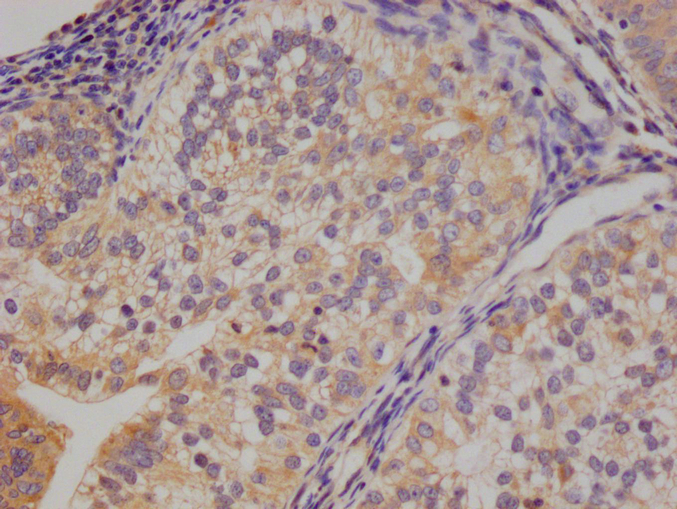
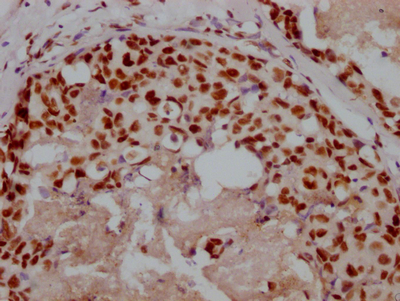
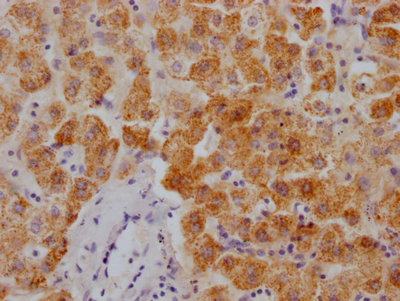
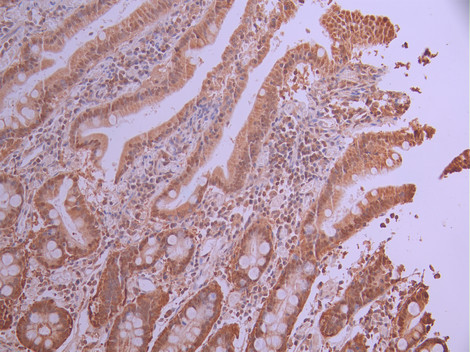 IHC image of CSB-RA580897A0HU diluted at 1:100 and staining in paraffin-embedded human small intestine tissue performed on a Leica BondTM system. After dewaxing and hydration, antigen retrieval was mediated by high pressure in a citrate buffer (pH 6.0). Section was blocked with 10% normal goat serum 30min at RT. Then primary antibody (1% BSA) was incubated at 4°C overnight. The primary is detected by a Goat anti-rabbit polymer IgG labeled by HRP and visualized using 0.05% DAB.
 -
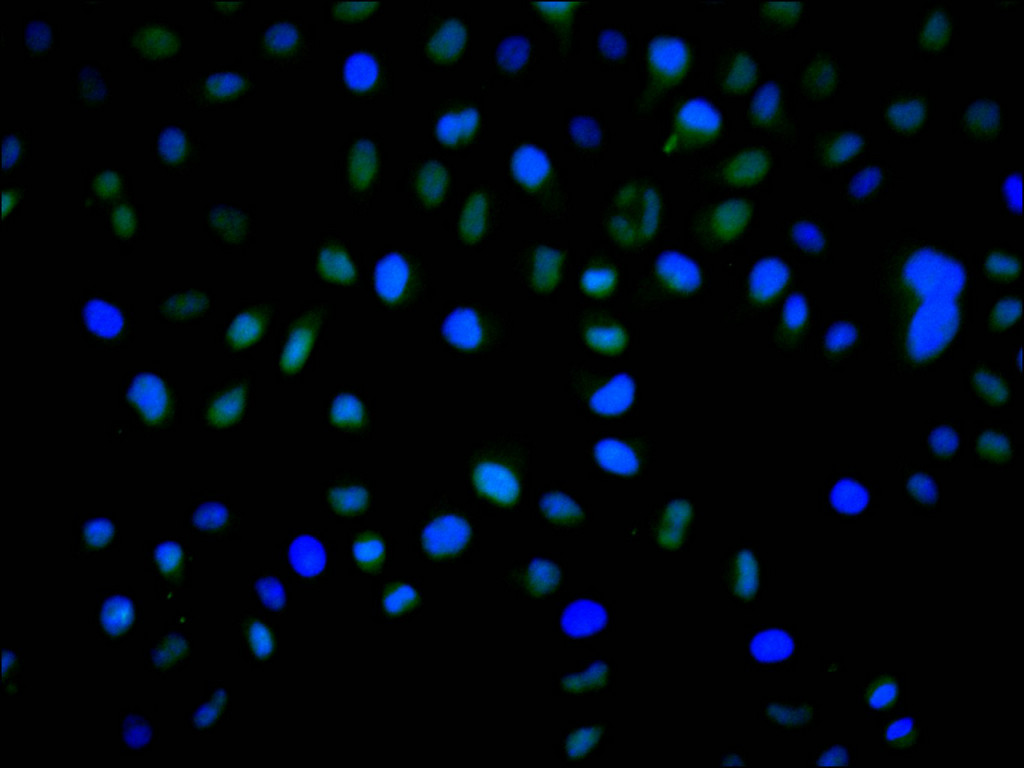 Immunofluorescence staining of Hela cell with CSB-RA580897A0HU at 1:50, counter-stained with DAPI. The cells were fixed in 4% formaldehyde, permeabilized using 0.2% Triton X-100 and blocked in 10% normal Goat Serum. The cells were then incubated with the antibody overnight at 4°C. The secondary antibody was Alexa Fluor 488-congugated AffiniPure Goat Anti-Rabbit IgG(H+L).
 -
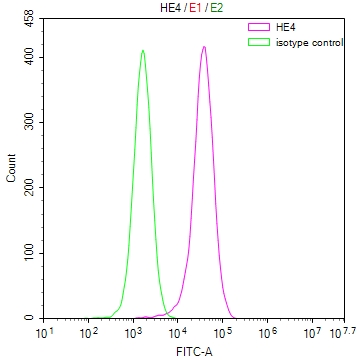
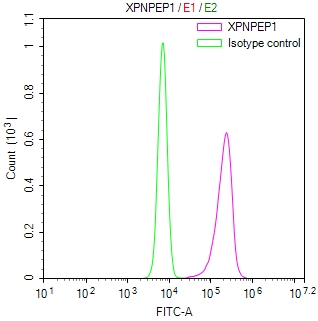
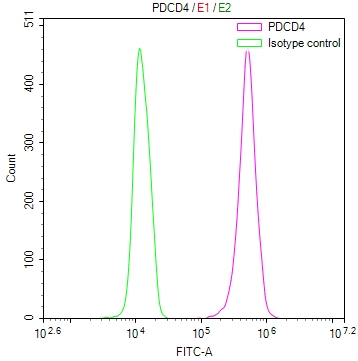 Overlay Peak curve showing Hela cells stained with CSB-RA580897A0HU (red line) at 1:100. The cells were fixed in 4% formaldehyde and permeated by 0.2% TritonX-100 for 10min. Then 10% normal goat serum to block non-specific protein-protein interactions followed by the antibody (1ug/1*106cells) for 45min at 4℃. The secondary antibody used was FITC-conjugated goat anti-rabbit IgG (H+L) at 1/200 dilution for 35min at 4℃.Control antibody (green line) was Rabbit IgG (1ug/1*106cells) used under the same conditions. Acquisition of >10,000 events was performed.
-
-
其他:
產品詳情
-
Uniprot No.:
-
基因名:PDCD4
-
別名:Programmed cell death protein 4 (Neoplastic transformation inhibitor protein) (Nuclear antigen H731-like) (Protein 197/15a), PDCD4, H731
-
反應種屬:Human
-
免疫原:A synthesized peptide from human PDCD4 protein
-
免疫原種屬:Homo sapiens (Human)
-
標記方式:Non-conjugated
-
克隆類型:Monoclonal
-
抗體亞型:Rabbit IgG
-
純化方式:Affinity-chromatography
-
克隆號:6F3
-
濃度:It differs from different batches. Please contact us to confirm it.
-
保存緩沖液:Preservative: 0.03% Proclin 300
Constituents: 50% Glycerol, 0.01M PBS, PH 7.4 -
產品提供形式:Liquid
-
應用范圍:ELISA, IHC, IF, FC
-
推薦稀釋比:
Application Recommended Dilution IHC 1:50-1:200 IF 1:50-1:200 FC 1:50-1:200 -
Protocols:
-
儲存條件:Upon receipt, store at -20°C or -80°C. Avoid repeated freeze.
-
貨期:Basically, we can dispatch the products out in 1-3 working days after receiving your orders. Delivery time maybe differs from different purchasing way or location, please kindly consult your local distributors for specific delivery time.
-
用途:For Research Use Only. Not for use in diagnostic or therapeutic procedures.
產品評價

相關產品
靶點詳情
-
功能:Inhibits translation initiation and cap-dependent translation. May excert its function by hindering the interaction between EIF4A1 and EIF4G. Inhibits the helicase activity of EIF4A. Modulates the activation of JUN kinase. Down-regulates the expression of MAP4K1, thus inhibiting events important in driving invasion, namely, MAPK85 activation and consequent JUN-dependent transcription. May play a role in apoptosis. Tumor suppressor. Inhibits tumor promoter-induced neoplastic transformation. Binds RNA.
-
基因功能參考文獻:
- Study established that upregulation of miR-96 in glioblastoma multiforme (GBM) cells confers radioresistance via targeting PDCD4, which might be a potential therapeutic target for GBM. PMID: 30066909
- This study revealed a dynamic regulatory relationship between PDCD4 and critical factors for EMT, establishing a broad, functional role for PDCD4 in laryngeal carcinoma, which may be propagated by the STAT3-miR-21 pathway. PMID: 29510060
- the localization of Pdcd4 to the cytoplasm may be responsible for the suppression of the target mRNA translation and apoptosis. PMID: 29442268
- PDCD4 and PTEN were the functional targets of miR-21. PMID: 30074182
- Various studies support evidence that PDCD4, is a novel tumor suppressor gene, and is downregulated or even absent in colorectal cancer (CRC) and suppresses CRC deterioration. [review] PMID: 30243936
- In the high malignant group the PDCD4 mRNA and PDCD5 mRNA expressions were significantly decreased compared with the low malignant group and the control group. PDCD4 mRNA and PDCD5 mRNA expressions are promising targets for the diagnosis and treatment of glioma. PMID: 29921407
- miR-21 may promote salivary adenoid cystic carcinoma progression via PDCD4 and PTEN down-regulation and Bcl-2 up-regulation. PMID: 29328455
- The expression of PDCD4 is decreased in cervical cancer tissues, compared to miR-150 which is increased. PMID: 29091902
- Our study demonstrated that lncRNA-XIST, which acts as a miRNA sponge, impedes miR-21-5p to maintain the expression of PDCD4, which contributes to the progression of osteosarcoma (OS). Our findings suggest that the newly identified XIST/miR-21-5p/PDCD4 axis could be a potential biomarker or therapeutic target for OS. PMID: 29048648
- miR206 promoted the onset of SANFH by inducing apoptosis and suppressed the proliferation of osteoblasts, which was dependent on the inhibition of PDCD4. PMID: 29115490
- Results found PDCD4 as a target gene of miR-93 and miR-93 could down-regulate the expression of PDCD4 by directly targeting its 3'-UTR. The re-expression of PDCD4 could attenuate the hepatocellular carcinoma (HCC) cell invasion and migration induced by miR-93, while the knockdown of PDCD4 would promote HCC cell migration and invasion via the EMT pathway. PMID: 28748353
- Reduced expression of PDCD4 was found in decidual and chorionic tissues, and peripheral blood mononuclear cells from patients with missed abortion. PMID: 29017439
- miR503 promotes tumour growth and invasion by directly targeting PDCD4. PMID: 28849168
- A novel mechanism of Pdcd4 action as a translation inhibitor and tumor suppressor has been proposed. PMID: 28853972
- Taken together, this study highlights an important role for miR-23a/b as oncomiRs in gastric cancer through the inhibition of PDCD4 translation. These findings may shed new light on the molecular mechanism of gastric carcinogenesis and provide a new avenue for gastric cancer treatment. PMID: 28981115
- lncRNA CASC9 functions as an oncogene by negatively regulating PDCD4 expression through recruiting EZH2 and subsequently altering H3K27me3 level. Our study implicates lncRNA CASC9 as a valuable biomarker for ESCC diagnosis and prognosis. PMID: 28854977
- Exosomes derived from cisplatin-resistant OSCC cells transferred miR-21 to oral squamous cell carcinoma (OSCC) parental cells and induced cisplatin resistance by targeting phosphatase and tensin homolog (PTEN) and programmed cell death 4 (PDCD4). PMID: 28910982
- These results indicate that the ROS-STAT3-miR-21-PDCD4 signaling axis plays an important role in arsenic -induced carcinogenesis. PMID: 27876813
- PDCD4 is expressed in the cytoplasm of glandular epithelium of control endometrium and varied during the cycle changes of endometrium. Compared with the proliferative phase of control endometrium, PDCD4 expression was down-regulated in proliferative phase of eutopic or ectopic endometrium. There was no cyclic variation of PDCD4 expression in eutopic endometrium of adenomyosis patients due to progesterone resistance. PMID: 27765271
- Study confirmed that PDCD4 was downregulated in non-small cell lung cancer (NSCLC). PDCD4 is a functional target for miR-155 at both transcriptional and post-transcriptional levels. PMID: 28842954
- We demonstrated that miR-208a-3p suppressed apoptosis in gastric cancer cells by targeting PDCD4. PMID: 27634902
- PDCD4 is involved in negative control of stromal fibroblasts conversion into cancer associated fibroblast PMID: 27542230
- Results identify PDCD4 as a novel RSK substrate. Authors demonstrate that RSK-mediated phosphorylation of PDCD4 at S76 promotes PDCD4 degradation. PMID: 27028868
- evaluate the relative expression levels of miR-196a2 and three of its selected apoptosis-related targets; ANXA1, DFFA and PDCD4 in a sample of GI cancer patients PMID: 29091952
- In colorectal cancer tissues, the Sin1 protein but not mRNA was significantly upregulated while Pdcd4 protein was downregulated, suggesting that loss of Pdcd4 might correlate with Sin1 protein level but not mRNA level in colorectal cancer. PMID: 28692058
- miRNA-96 is significantly overexpressed in glioma tissues. Moreover, miRNA-96 plays a critical role in apoptosis by inhibiting the expression of PDCD4 in glioma. PMID: 26846266
- Supporting the clinical relevance of our results, we found an inverse correlation between ErbB-2/Stat3 nuclear co-expression and PDCD4 expression in ErbB-2-positive primary invasive breast cancer PMID: 26212010
- this study highlights an oncomiR role for miR-181b in regulating PDCD4 in colorectal cancer and suggests that miR-181b may be a novel molecular therapeutic target for colorectal cancer. PMID: 27647131
- Higher PDCD4 expression plays a role in polycystic ovary syndrome by affecting obesity, insulin resistance, lipid metabolism disorders, and granulosa cell apoptosis. PMID: 26868993
- results revealed that microRNA 200a inhibits erythroid differentiation by targeting PDCD4 and THRB PMID: 27734462
- The expression of miR-21 and PDCD4 at messenger RNA level was evaluated by quantitative real-time polymerase chain reaction, while the protein level of PDCD4 was determined by Western blotting. Authors found that locked nucleic acid-anti-miR-21 transfection was associated with a significant reduction in metastatic properties as assessed by the in ovo model. PMID: 28347230
- Data indicate that programmed cell death 4 (PDCD4) was identified to be a target of ubiquitin-specific protease 4 (USP4), which plays a role as a tumor suppressor. PMID: 27430936
- PDCD4 down-regulation is involved in the progression of several types of solid tumor. PMID: 27852288
- Results show that exosome-shuttling miR-21 represses PDCD4 protein expression by binding to 3'-UTR in esophageal cancer cells. PMID: 27035745
- miR-21, acting on PDCD4, which interacts with Twist1 and represses the expression of Twist1, contributes to the EMT induced by arsenite in transformed bronchial epithelial cells. PMID: 25445583
- Data show that microRNA miR-93 directly binds to the 3' untranslated regions (3'-UTR) of the programmed cell death 4 (PDCD4) mRNA transcript and inhibits PDCD4 translation in gastric cancer cells PMID: 27021515
- miR-21 can confer drug resistance to 5-FU in pancreatic cancer cells by regulating the expression of tumor suppressor genes, as the target genes of miR-21, PTEN and PDCD4 can rescue 5-FU sensitivity and the phenotypic characteristics disrupted by miR-21. PMID: 26864640
- In HeLa cells, phosphorylation of HuR by ERK8 prevents it from binding to PDCD4 mRNA and allows miR-21-mediated degradation of PDCD4. PMID: 26595526
- miR-183 maybe functions as an oncogene by regulating gastric cancer cell proliferation, apoptosis and metastasis and the oncogenic effect of miR-183 may relate the direct targeting PDCD4 PMID: 26961483
- PDCD4 inhibits cell growth through PI3K/Akt signaling in non-small cell lung cancer. PMID: 26802652
- This study describes the regulation of PDCD4 specifically in tonsil SCC by miR-499 and miR-21 and has documented the loss of PDCD4 in oropharyngeal squamous cell carcinoma PMID: 26867589
- Unprecedentedly, HuR was also found to bind to miR-21 directly, preventing its interaction with the PDCD4 3'-UTR, thereby preventing the translation repression of PDCD4. PMID: 26189797
- miR-21 has a role in upregulating PTEN, RECK and PDCD4 in glioma PMID: 26284486
- PDGF-BB stimulates cell proliferation through microRNA-21-mediated PDCD4 down-regulation, leading to the development of TAO. PMID: 26943153
- Results indicated that PDCD4 may be a novel candidate of tumor suppressor gene in hepatocellular carcinoma and that promoter hypermethylation is an important mechanism for its downregulation and a good predictor of survival. PMID: 26871813
- These findings suggest that miR-21 and PDCD4 might be potential biomarkers for malignant melanoma and might provide treatment targets in the future. PMID: 26150475
- We propose that SRSF3 could act as a coordinator of the expression of PDCD4 protein via two mechanisms on two alternatively spliced mRNA isoforms. PMID: 26773498
- Low PDCD4 increases osteosarcoma cells resistance to apoptosis. PMID: 26276504
- These findings support the feasibility of future efforts for diagnosis and gene therapy for prostate cancer that are based on IL-6, miR-21, and PDCD4. PMID: 26252635
- RT-qPCR and western blotting showed that miR-183 negatively regulated PDCD4 protein expression but had no impact on mRNA expression of PDCD4 PMID: 26063221
顯示更多
收起更多
-
亞細胞定位:Nucleus. Cytoplasm.
-
蛋白家族:PDCD4 family
-
組織特異性:Up-regulated in proliferative cells. Highly expressed in epithelial cells of the mammary gland. Reduced expression in lung cancer and colon carcinoma.
-
數據庫鏈接:
Most popular with customers
-
-
YWHAB Recombinant Monoclonal Antibody
Applications: ELISA, WB, IHC, IF, FC
Species Reactivity: Human, Mouse, Rat
-
Phospho-YAP1 (S127) Recombinant Monoclonal Antibody
Applications: ELISA, WB, IHC
Species Reactivity: Human
-
-
-
-
-