Recombinant Human Extracellular serine/threonine protein kinase FAM20C (FAM20C), partial
In Stock-
中文名稱:人FAM20C重組蛋白
-
品名簡稱:Recombinant Human FAM20C protein, partial
-
貨號:CSB-MP816901HU1
-
說明書:
-
規格:¥828
-
圖片:
-
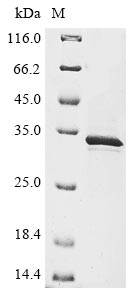 (Tris-Glycine gel) Discontinuous SDS-PAGE (reduced) with 5% enrichment gel and 15% separation gel.
-
-
其他:
產品詳情
-
純度:Greater than 85% as determined by SDS-PAGE.
-
基因名:FAM20C
-
Uniprot No.:
-
別名:Dentin matrix protein 4
-
種屬:Homo sapiens (Human)
-
蛋白長度:Partial
-
來源:Mammalian cell
-
分子量:29.9 kDa
-
表達區域:354-565aa
-
氨基酸序列FISPANNICFYGECSYYCSTEHALCGKPDQIEGSLAAFLPDLSLAKRKTWRNPWRRSYHKRKKAEWEVDPDYCEEVKQTPPYDSSHRILDVMDMTIFDFLMGNMDRHHYETFEKFGNETFIIHLDNGRGFGKYSHDELSILVPLQQCCRIRKSTYLRLQLLAKEEYKLSLLMAESLRGDQVAPVLYQPHLEALDRRLRVVLKAVRDCVERNG
Note: The complete sequence may include tag sequence, target protein sequence, linker sequence and extra sequence that is translated with the protein sequence for the purpose(s) of secretion, stability, solubility, etc.
If the exact amino acid sequence of this recombinant protein is critical to your application, please explicitly request the full and complete sequence of this protein before ordering. -
蛋白標簽:N-terminal 10xHis-tagged and C-terminal Myc-tagged
-
產品提供形式:Liquid or Lyophilized powder
Note: We will preferentially ship the format that we have in stock, however, if you have any special requirement for the format, please remark your requirement when placing the order, we will prepare according to your demand. -
緩沖液:If the delivery form is liquid, the default storage buffer is Tris/PBS-based buffer, 5%-50% glycerol. If the delivery form is lyophilized powder, the buffer before lyophilization is Tris/PBS-based buffer, 6% Trehalose.
-
復溶:We recommend that this vial be briefly centrifuged prior to opening to bring the contents to the bottom. Please reconstitute protein in deionized sterile water to a concentration of 0.1-1.0 mg/mL.We recommend to add 5-50% of glycerol (final concentration) and aliquot for long-term storage at -20°C/-80°C. Our default final concentration of glycerol is 50%. Customers could use it as reference.
-
儲存條件:Store at -20°C/-80°C upon receipt, aliquoting is necessary for mutiple use. Avoid repeated freeze-thaw cycles.
-
保質期:The shelf life is related to many factors, storage state, buffer ingredients, storage temperature and the stability of the protein itself.
Generally, the shelf life of liquid form is 6 months at -20°C/-80°C. The shelf life of lyophilized form is 12 months at -20°C/-80°C. -
貨期:3-7 business days
-
注意事項:Repeated freezing and thawing is not recommended. Store working aliquots at 4°C for up to one week.
-
Datasheet & COA:Please contact us to get it.
產品評價

相關產品
靶點詳情
-
功能:Golgi serine/threonine protein kinase that phosphorylates secretory pathway proteins within Ser-x-Glu/pSer motifs and plays a key role in biomineralization of bones and teeth. Constitutes the main protein kinase for extracellular proteins, generating the majority of the extracellular phosphoproteome. Mainly phosphorylates proteins within the Ser-x-Glu/pSer motif, but also displays a broader substrate specificity. Phosphorylates casein as well as a number of proteins involved in biomineralization such as AMELX, AMTN, ENAM and SPP1. In addition to its role in biomineralization, also plays a role in lipid homeostasis, wound healing and cell migration and adhesion.
-
基因功能參考文獻:
- that FAM20C may affect the biomineralization by the means more than local phosphorylation of extracellular matrix proteins and systemic phosphorus homeostasis PMID: 28926103
- Histidine-rich Ca-binding protein (HRC) was phosphorylated by family with sequence similarity 20C (Fam20C) both in vitro and in vivo. PMID: 28784772
- These results suggest that TET1 potentially promotes the cytodifferentiation potential of human dental pulp cells through its DNA demethylation machinery and upregulation of FAM20C protein expression. PMID: 29277934
- findings clarify FAM20C's role in hard tissue formation and mineralization, and show that Raine syndrome is congenital sclerosing osteomalacia with cerebral calcification. PMID: 27862258
- Alterations of Fam20C activity, promoted by myriocin and sphingolipids, are not accompanied by any significant change in Fam20C protein. These data provide the proof of concept that Fam20C activity is under the control of sphingolipid signaling PMID: 28236661
- Our report reinforces that Raine syndrome is compatible with life, and that mild hypophosphatemia and amelogenesis imperfecta are key features of the attenuated form. PMID: 27667191
- The Fam20C-and VLK-family of kinases mediate the phosphorylation of proteins in the secretory pathway and extracellular space.Mutation in several secretory pathway kinases cause human disease PMID: 25862977
- by treating Fam20C expressing HEK293T cells with myriocin, a potent inhibitor of the sphingosine biosynthetic pathway, the activity of Fam20C released into the conditioned medium is substantially decreased corroborating the concept that sphingosine PMID: 25936777
- Using CRISPR/Cas9 genome editing, mass spectrometry, and biochemistry, study identifies more than 100 secreted phosphoproteins as genuine Fam20C substrates; further, study shows that Fam20C exhibits broader substrate specificity than previously appreciated. PMID: 26091039
- phenotype in two families with non-lethal Raine syndrome with FAM20C mutations PMID: 25928877
- Findings suggest that certain homozygous FAM20C mutations can cause FGF23-related hypophosphatemic osteomalacia and indicate the multiple roles of FAM20C in bone. PMID: 24982027
- Results suggest that FAM20C suppresses FGF23 production by enhancing DMP1 expression, and inactivating mutations in FAM20C cause FGF23-related hypophosphatemia by decreasing transcription of DMP1. PMID: 25026495
- We report on a child who is homozygous for a 487-kb deletion in 7p22.3 that contains FAM20C PMID: 24039075
- Fam20C phosphorylates FGF23, which promotes FGF23 proteolysis by furin by blocking O-glycosylation by polypeptide N-acetylgalactosaminyltransferase 3. PMID: 24706917
- mutations in FAM20C provide a putative new mechanism in human subjects leading to dysregulated FGF23 levels, hypophosphatemia, hyperphosphaturia, dental anomalies, intracerebral calcifications and osteosclerosis of the long bones PMID: 23325605
- Our results identify FAM20C as a kinase for secreted phosphoproteins and establish a biochemical basis for Raine syndrome. PMID: 22900076
- Fam20C appears to be the Golgi casein kinase that phosphorylates secretory pathway proteins within S-x-E motifs; Fam20C phosphorylates caseins and several secreted proteins implicated in biomineralization; mutations in Fam20C cause an osteosclerotic bone dysplasia known as Raine syndrome PMID: 22582013
- Osteosclerotic bone dysplasia in siblings with a Fam20C mutation PMID: 20825432
- This study defines the causative role of FAM20C in this lethal osteosclerotic disorder and its crucial role in normal bone development. PMID: 17924334
- Mutation of FAM20C does not always lead to the infantile lethality previously seen as a prerequisite for Raine syndrome diagnosis. PMID: 19250384
顯示更多
收起更多
-
相關疾病:Raine syndrome (RNS)
-
亞細胞定位:Secreted. Golgi apparatus.
-
蛋白家族:FAM20 family
-
組織特異性:Widely expressed.
-
數據庫鏈接:
Most popular with customers
-
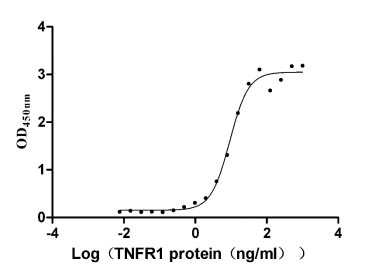
Recombinant Human Tumor necrosis factor receptor superfamily member 1A (TNFRSF1A), partial (Active)
Express system: Mammalian cell
Species: Homo sapiens (Human)
-
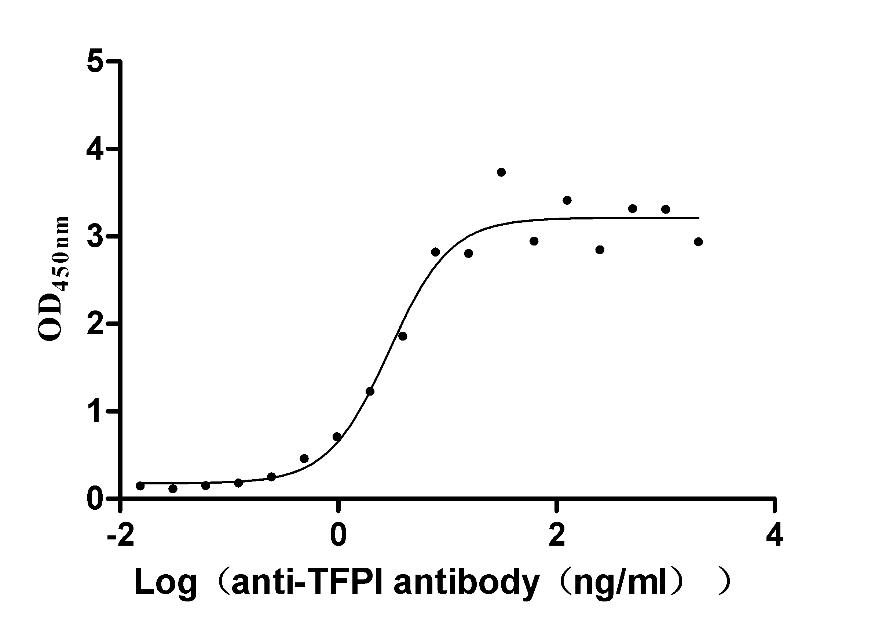
Recombinant Rabbit Tissue factor pathway inhibitor (TFPI) (Active)
Express system: Mammalian cell
Species: Oryctolagus cuniculus (Rabbit)
-
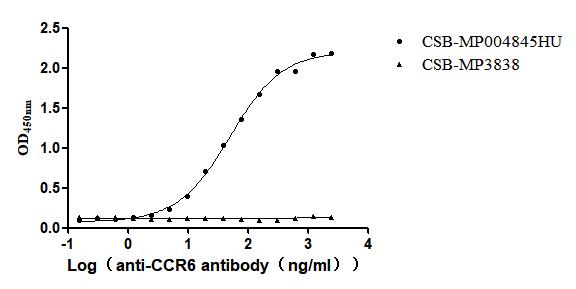
Recombinant Human C-C chemokine receptor type 6(CCR6)-VLPs (Active)
Express system: Mammalian cell
Species: Homo sapiens (Human)
-
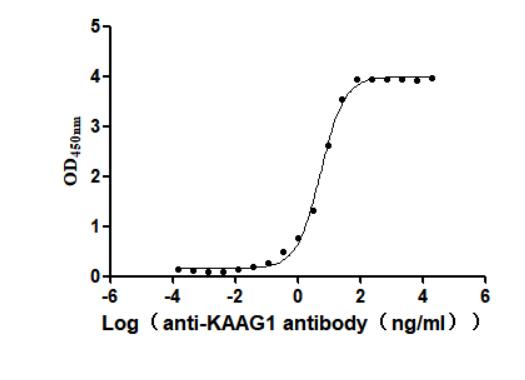
Recombinant Human Kidney-associated antigen 1(KAAG1) (Active)
Express system: Baculovirus
Species: Homo sapiens (Human)