Recombinant Human NLR family member X1 (NLRX1), partial
-
中文名稱:人NLRX1重組蛋白
-
貨號:CSB-YP015878HU
-
規格:
-
來源:Yeast
-
其他:
-
中文名稱:人NLRX1重組蛋白
-
貨號:CSB-EP015878HU
-
規格:
-
來源:E.coli
-
其他:
-
中文名稱:人NLRX1重組蛋白
-
貨號:CSB-EP015878HU-B
-
規格:
-
來源:E.coli
-
共軛:Avi-tag Biotinylated
E. coli biotin ligase (BirA) is highly specific in covalently attaching biotin to the 15 amino acid AviTag peptide. This recombinant protein was biotinylated in vivo by AviTag-BirA technology, which method is BriA catalyzes amide linkage between the biotin and the specific lysine of the AviTag.
-
其他:
-
中文名稱:人NLRX1重組蛋白
-
貨號:CSB-BP015878HU
-
規格:
-
來源:Baculovirus
-
其他:
-
中文名稱:人NLRX1重組蛋白
-
貨號:CSB-MP015878HU
-
規格:
-
來源:Mammalian cell
-
其他:
產品詳情
-
純度:>85% (SDS-PAGE)
-
基因名:
-
Uniprot No.:
-
別名:Caterpiller protein 11.3; CLR11.3; DLNB26; FLJ21478; MGC131937; MGC21025; NLR family member X1; NLR family, X1; Nlrx1; NLRX1_HUMAN; NOD-like receptor X1; NOD26; NOD5; NOD9; Nucleotide-binding oligomerization domain protein 26; Nucleotide-binding oligomerization domain protein 5; Nucleotide-binding oligomerization domain protein 9; nucleotide-binding oligomerization domain, leucine rich repeat containing X1; Protein Caterpiller 11.3
-
種屬:Homo sapiens (Human)
-
蛋白長度:Partial
-
蛋白標簽:Tag?type?will?be?determined?during?the?manufacturing?process.
The tag type will be determined during production process. If you have specified tag type, please tell us and we will develop the specified tag preferentially. -
產品提供形式:Lyophilized powder
Note: We will preferentially ship the format that we have in stock, however, if you have any special requirement for the format, please remark your requirement when placing the order, we will prepare according to your demand. -
復溶:We recommend that this vial be briefly centrifuged prior to opening to bring the contents to the bottom. Please reconstitute protein in deionized sterile water to a concentration of 0.1-1.0 mg/mL.We recommend to add 5-50% of glycerol (final concentration) and aliquot for long-term storage at -20℃/-80℃. Our default final concentration of glycerol is 50%. Customers could use it as reference.
-
儲存條件:Store at -20°C/-80°C upon receipt, aliquoting is necessary for mutiple use. Avoid repeated freeze-thaw cycles.
-
保質期:The shelf life is related to many factors, storage state, buffer ingredients, storage temperature and the stability of the protein itself.
Generally, the shelf life of liquid form is 6 months at -20°C/-80°C. The shelf life of lyophilized form is 12 months at -20°C/-80°C. -
貨期:Delivery time may differ from different purchasing way or location, please kindly consult your local distributors for specific delivery time.Note: All of our proteins are default shipped with normal blue ice packs, if you request to ship with dry ice, please communicate with us in advance and extra fees will be charged.
-
注意事項:Repeated freezing and thawing is not recommended. Store working aliquots at 4°C for up to one week.
-
Datasheet :Please contact us to get it.
產品評價

相關產品
靶點詳情
-
功能:Participates in antiviral signaling. Acts as a negative regulator of MAVS-mediated antiviral responses, through the inhibition of the virus-induced RLH (RIG-like helicase)-MAVS interaction. Instead, promotes autophagy by interacting with TUFM and subsequently recruiting the autophagy-related proteins ATG5 and ATG12. Regulates also MAVS-dependent NLRP3 inflammasome activation to attenuate apoptosis. Has no inhibitory function on NF-kappa-B signaling pathway, but enhances NF-kappa-B and JUN N-terminal kinase dependent signaling through the production of reactive oxygen species.
-
基因功能參考文獻:
- Data show that NLRX1 specifically interacts with FASTKD5 and colocalizes with mitochondrial RNA granules. Further results suggest an important role of NLRX1 in regulating the post-transcriptional processing of mitochondrial RNA, which may have an important implication in bioenergetic adaptation during metabolic stress, oncogenic transformation and innate immunity. PMID: 29932989
- genetic association studies in Han population in southern China: Data suggest that, in subjects with type 2 diabetes, an SNP in NLRX1 (rs4245191) is associated with macro-vascular complications and cerebral infarction in the population studied; no such association was found for two other SNPs in NLRX1 (rs10790286, rs561830) or for two SNPs in TRAF6 (rs5030445, rs16928973). (TRAF6 = TNF receptor associated factor-6) PMID: 29046236
- Data show that NLRX1 suppresses tumorigenesis and reveals new genetic pathways involved in the pathobiology of histiocytic sarcoma. PMID: 27105514
- NLRX1 exerted opposing regulatory effects on viral activation of the transcription factors IRF1 and IRF3. NLRX1 suppressed MAVS-mediated activation of IRF3, it conversely facilitated virus-induced increases in IRF1 expression and thereby enhanced control of viral infection. PMID: 28967880
- downregulated in brain injury following aneurysm PMID: 28993512
- The data suggests that NLRX1 plays a positive role in Kaposi's sarcoma-associated herpesvirus (KSHV) lytic replication by suppressing the IFNbeta response during the process of KSHV reactivation, which might serve as a potential target for restricting KSHV replication and transmission. PMID: 28459883
- we identify a novel signaling hub centering on the NLRX1 TUFM protein complex, promoting autophagic flux. Defects in the expression of either NLRX1 or TUFM result in compromised autophagy when treated with EGFR inhibitors.These findings expand our understanding of the components involved in head and neck squamous cell carcinoma autophagy machinery that responds to EGFR inhibitors. PMID: 26876213
- findings suggest that NLRX1 may function as a cardiac-protective molecule in myocardial ischemic injury by repressing inflammation and apoptosis PMID: 27393910
- NLRX1, NLRP12 and NLRC3 negatively modulate the host immune response following virus exposure. (Review) PMID: 26763980
- NLRX1 acts as a potential tumor suppressor by regulating the TNF-alpha induced cell death and metabolism. PMID: 25639646
- These data support a model in which CS-dependent NLRX1 inhibition facilitates MAVS/RHL activation and subsequent inflammation, remodeling, protease, cell death, and inflammasome responses. PMID: 25938787
- Together, these results suggest a novel mechanism for rhinovirus-induced epithelial barrier disruption involving NLRX-1 and mitochondrial reactive oxygen species generation. PMID: 24429360
- NLRX1 and TUFM work in concert to reduce cytokine response and augment autophagy. PMID: 23321557
- Results showed that missense mutations in transmembrane protein 2 p.Ser1254Asn, interferon alpha 2 p.Ala120Thr, its regulator NLR family member X1 p.Arg707Cys, and complement component 2 p.Glu318Asp were associated with chronic hepatitis B. PMID: 22610944
- Post-transcriptional inhibition of luciferase reporter assays by the Nod-like receptor proteins NLRX1 and NLRC3. PMID: 22718770
- NLRX1 attenuated IFN-I production & promoted autophagy during viral infection cells. NLRX1 interacts with TUFM. PMID: 22749352
- NLRX1 interacts directly with RNA and suggestts a role for NLRX1 in recognition of intracellular viral RNA in antiviral immunity. PMID: 22386589
- the presence of NLRX1 is required for optimal chlamydial growth and reactive oxygen species production PMID: 20959452
- function of NOD-like receptors in the antiviral response [REVIEW] PMID: 18466630
- identification of NLRX1 as a check against mitochondrial antiviral responses--an intersection of three ancient cellular processes: NLR signalling, intracellular virus detection and the use of mitochondria as a platform for anti-pathogen signalling PMID: 18200010
- These results identify NLRX1 as a NLR that contributes to the link between reactive oxygen species generation at the mitochondria and innate immune responses. PMID: 18219313
- sequesters MAVS away from RIG-I and thereby prevents mitochondrial anti-viral immunity PMID: 18397740
- NLRX1 has a functional leader sequence and fully translocates to the mitochondrial matrix. PMID: 19692591
顯示更多
收起更多
-
亞細胞定位:Mitochondrion outer membrane.
-
蛋白家族:NLRP family
-
組織特異性:Ubiquitously expressed. Strongest expression in mammary gland, heart and muscle. Detected in HeLa, HEK293T, THP-1, HL-60, Raji and Jurkat cell lines (at protein level).
-
數據庫鏈接:
Most popular with customers
-
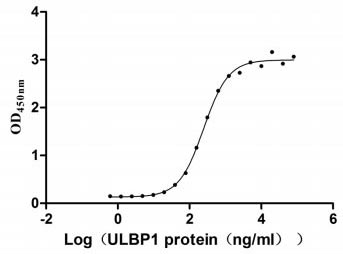
Recombinant Human NKG2-D type II integral membrane protein (KLRK1), partial (Active)
Express system: Mammalian cell
Species: Homo sapiens (Human)
-
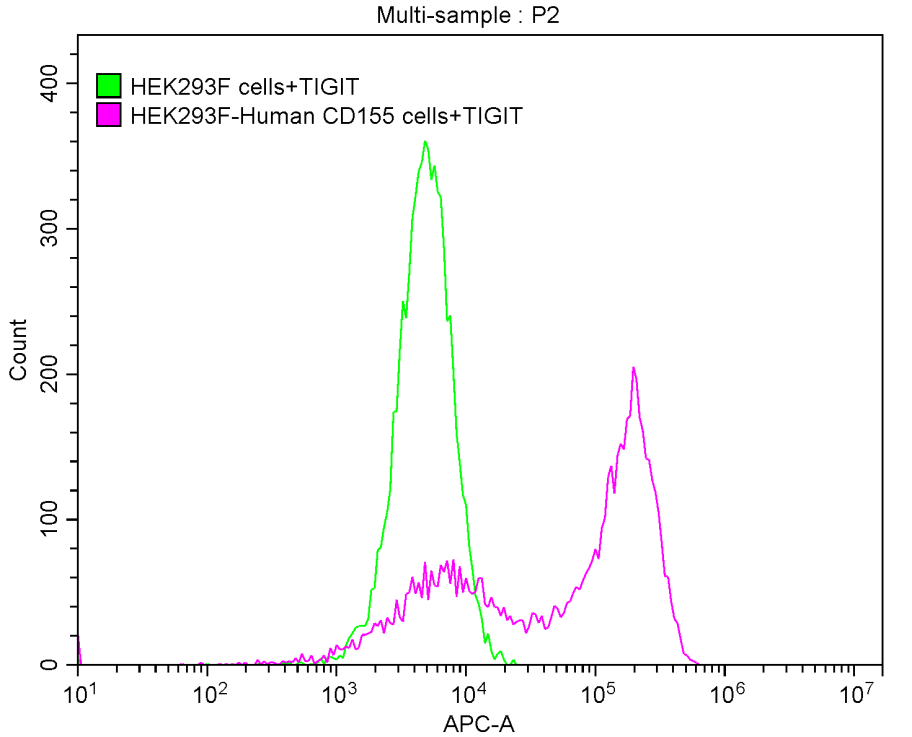
Recombinant Human T-cell immunoreceptor with Ig and ITIM domains (TIGIT), partial (Active)
Express system: Mammalian cell
Species: Homo sapiens (Human)
-
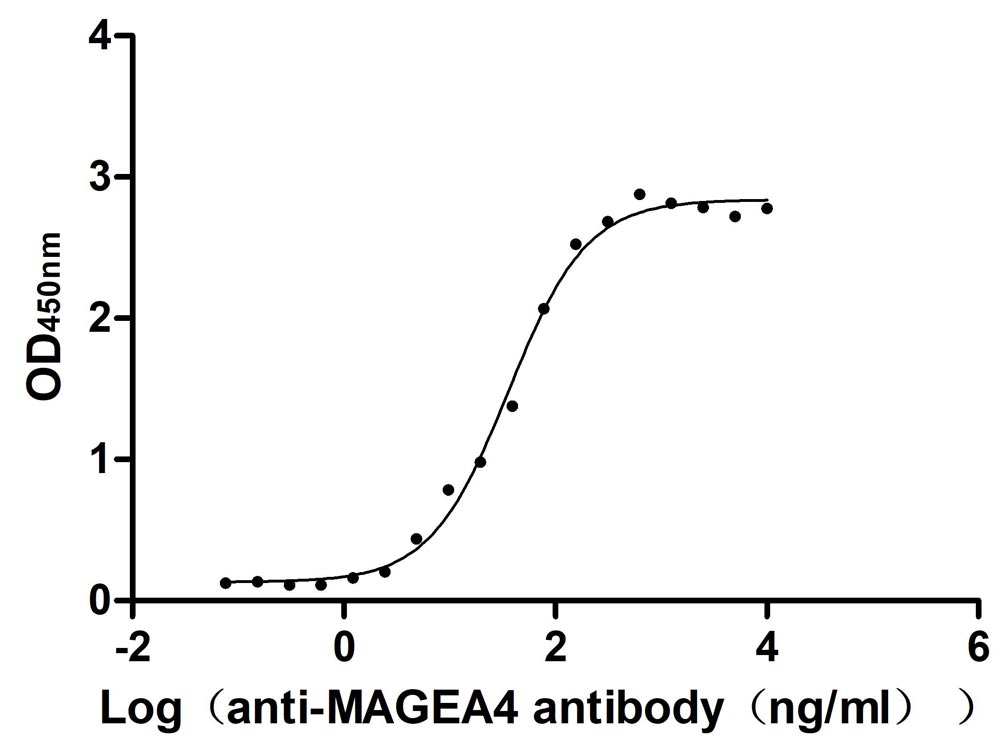
Recombinant Human Melanoma-associated antigen 4 (MAGEA4) (Active)
Express system: Mammalian cell
Species: Homo sapiens (Human)
-
-AC1.jpg)
Recombinant Human C-X-C chemokine receptor type 4 (CXCR4)-VLPs (Active)
Express system: Mammalian cell
Species: Homo sapiens (Human)
-

Recombinant Rat Intestinal-type alkaline phosphatase 1 (Alpi) (Active)
Express system: Mammalian cell
Species: Rattus norvegicus (Rat)
-
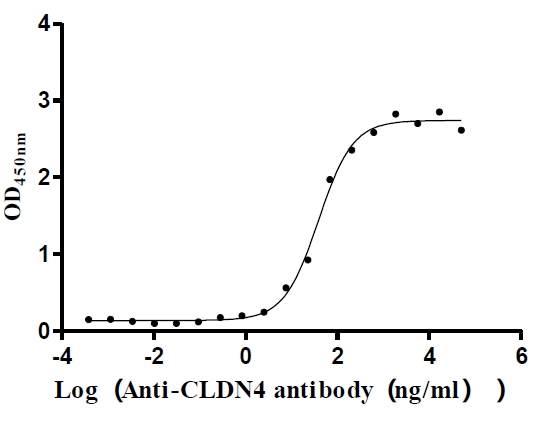
Recombinant Human Claudin-4 (CLDN4)-VLPs (Active)
Express system: Mammalian cell
Species: Homo sapiens (Human)
-
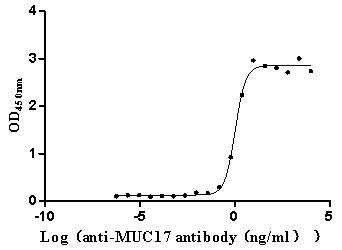
Recombinant Human Mucin-17 (MUC17), partial (Active)
Express system: Mammalian cell
Species: Homo sapiens (Human)
-
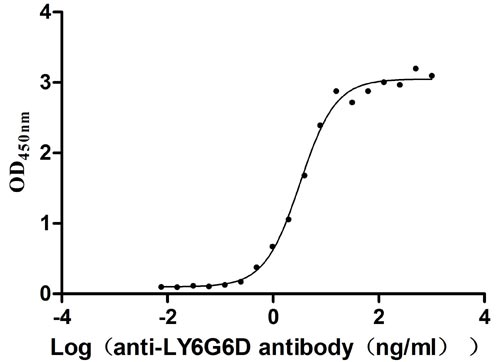
Recombinant Human Lymphocyte antigen 6 complex locus protein G6d (LY6G6D) (Active)
Express system: Yeast
Species: Homo sapiens (Human)