Recombinant Human POU domain, class 4, transcription factor 3 (POU4F3)
-
中文名稱:人POU4F3重組蛋白
-
貨號:CSB-YP620877HU
-
規格:
-
來源:Yeast
-
其他:
-
中文名稱:人POU4F3重組蛋白
-
貨號:CSB-EP620877HU
-
規格:
-
來源:E.coli
-
其他:
-
中文名稱:人POU4F3重組蛋白
-
貨號:CSB-EP620877HU-B
-
規格:
-
來源:E.coli
-
共軛:Avi-tag Biotinylated
E. coli biotin ligase (BirA) is highly specific in covalently attaching biotin to the 15 amino acid AviTag peptide. This recombinant protein was biotinylated in vivo by AviTag-BirA technology, which method is BriA catalyzes amide linkage between the biotin and the specific lysine of the AviTag.
-
其他:
-
中文名稱:人POU4F3重組蛋白
-
貨號:CSB-BP620877HU
-
規格:
-
來源:Baculovirus
-
其他:
-
中文名稱:人POU4F3重組蛋白
-
貨號:CSB-MP620877HU
-
規格:
-
來源:Mammalian cell
-
其他:
產品詳情
-
純度:>85% (SDS-PAGE)
-
基因名:POU4F3
-
Uniprot No.:
-
別名:Brain specific homeobox/POU domain protein 3C; Brain-3C; Brain-specific homeobox/POU domain protein 3C; BRN 3C; Brn-3C; BRN3C; class 4; DFNA 15; DFNA15; MGC138412; PO4F3_HUMAN; POU class 4 homeobox 3; POU domain; POU domain class 4 transcription factor 3; POU4F3; transcription factor 3
-
種屬:Homo sapiens (Human)
-
蛋白長度:full length protein
-
表達區域:1-338
-
氨基酸序列MMAMNSKQPF GMHPVLQEPK FSSLHSGSEA MRRVCLPAPQ LQGNIFGSFD ESLLARAEAL AAVDIVSHGK NHPFKPDATY HTMSSVPCTS TSSTVPISHP AALTSHPHHA VHQGLEGDLL EHISPTLSVS GLGAPEHSVM PAQIHPHHLG AMGHLHQAMG MSHPHTVAPH SAMPACLSDV ESDPRELEAF AERFKQRRIK LGVTQADVGA ALANLKIPGV GSLSQSTICR FESLTLSHNN MIALKPVLQA WLEEAEAAYR EKNSKPELFN GSERKRKRTS IAAPEKRSLE AYFAIQPRPS SEKIAAIAEK LDLKKNVVRV WFCNQRQKQK RMKYSAVH
-
蛋白標簽:Tag?type?will?be?determined?during?the?manufacturing?process.
The tag type will be determined during production process. If you have specified tag type, please tell us and we will develop the specified tag preferentially. -
產品提供形式:Lyophilized powder
Note: We will preferentially ship the format that we have in stock, however, if you have any special requirement for the format, please remark your requirement when placing the order, we will prepare according to your demand. -
復溶:We recommend that this vial be briefly centrifuged prior to opening to bring the contents to the bottom. Please reconstitute protein in deionized sterile water to a concentration of 0.1-1.0 mg/mL.We recommend to add 5-50% of glycerol (final concentration) and aliquot for long-term storage at -20℃/-80℃. Our default final concentration of glycerol is 50%. Customers could use it as reference.
-
儲存條件:Store at -20°C/-80°C upon receipt, aliquoting is necessary for mutiple use. Avoid repeated freeze-thaw cycles.
-
保質期:The shelf life is related to many factors, storage state, buffer ingredients, storage temperature and the stability of the protein itself.
Generally, the shelf life of liquid form is 6 months at -20°C/-80°C. The shelf life of lyophilized form is 12 months at -20°C/-80°C. -
貨期:Delivery time may differ from different purchasing way or location, please kindly consult your local distributors for specific delivery time.Note: All of our proteins are default shipped with normal blue ice packs, if you request to ship with dry ice, please communicate with us in advance and extra fees will be charged.
-
注意事項:Repeated freezing and thawing is not recommended. Store working aliquots at 4°C for up to one week.
-
Datasheet :Please contact us to get it.
產品評價

相關產品
靶點詳情
-
功能:Acts as a transcriptional activator. Acts by binding to sequences related to the consensus octamer motif 5'-ATGCAAAT-3' in the regulatory regions of its target genes. Involved in the auditory system development, required for terminal differentiation of hair cells in the inner ear.
-
基因功能參考文獻:
- POU4F3 c.602T>C (p.Leu201Pro) is related to midfrequency hearing loss. PMID: 29850532
- report the first nonsense mutation of POU4F3 associated with progressive hearing loss and explored the possible underlying mechanism PMID: 27999687
- DFNA52 were mapped between STR D5S2056 and D5S638 on chromosome, and analysis candidate genes in this region did not reveal any potentially pathogenic mutations segregating with congenital sensorineural hearing loss. PMID: 19138900
- Mutations in POU4F3 are a relatively common cause of autosomal dominant nonsyndromic hearing loss in Chinese Hans. PMID: 28053790
- Novel 12 POU4F3 likely pathogenic variants (six missense variants, three frameshift variants, and three nonsense variants) were successfully identified in 15 probands (2.5%) among 602 families exhibiting autosomal dominant hearing loss, whereas no variants were detected in the other 1,947 probands with autosomal recessive or inheritance pattern unknown hearing loss. PMID: 28545070
- results indicated GRHL2 might be a noise-induced hearing loss (NIHL) susceptibility gene, but the effect of POU4F3 on NIHL could only be detected when taking noise exposure into account and their effects were enhanced by higher levels of noise exposure PMID: 27271650
- this study identified a novel heterozygous mutation (c.602delT, p.L201fs) in the gene POU4F3 within a large hearing impaired Chinese family. PMID: 27535032
- The pou4f3 gene is regulated by ATOH1 and other transcription factors in cochlear hair cells. PMID: 25015561
- These data demonstrate that Nr2f2 is a direct target of POU4F3 in vitro and that this regulatory relationship may be relevant to hair cell development and survival. PMID: 25372459
- Data indicate that POUF4F3 deletion associated with hearing impairment. PMID: 24556497
- new variants in genes such as POU4F3 is associated with nonsyndromic deafness and vestibular dysfunction PMID: 24275721
- SNP linkage analysis and whole exome sequencing identify a novel POU4F3 mutation in autosomal dominant late-onset nonsyndromic hearing loss (DFNA15). PMID: 24260153
- This is the first report of a POU4F3 mutation in Asia, and moreover our data suggest that further investigation will need to delineate ethnicity-specific genetic background for autosomal dominant non-syndromic hearing loss within Asian populations. PMID: 20434433
- Molecular modelling is utilised to propose a mechanism of stability enhancement, via an interaction between the truncated POU(HD) domain and the POU(S) domain of the transcription factor. PMID: 20054994
- Proneural and proneuroendocrine transcription factor expression in cutaneous mechanoreceptor (Merkel) cells and Merkel cell carcinoma PMID: 12209986
- Mutant POU4F3 loses most of its transcriptional activity and most of its ability to bind to DNA. The mutation causes autosomal-dominant nonsyndromic hearing loss and eventually leads to hair cell morbidity in affected family H members. PMID: 14585957
- Data show that Brn-3c is capable of activating both BDNF and NT-3 promoters in inner ear sensory epithelial cell lines. PMID: 15465029
- our data show there are common sequence variants in the Brn-3c 5'-flanking region that affect transcriptional regulation in vitro PMID: 17611044
- Mutation analysis of the POU4F3 gene in 30 patients suffering from dominantly inherited hearing impairment revealed a second novel missense mutation (c.668T>C). PMID: 18228599
- report presents a detailed audiometric analysis of a Dutch family linked to DFNA15 with a novel mutation (p.L289F) in the POU4F3 gene PMID: 18347256
- extended subset of L289F POU4F3 mutation carriers varied from normal to areflexia in cochleovestibular disease PMID: 19372648
- Cochleovestibular characteristics were investigated in a Dutch DFNA15 family with a novel POU4F3 mutation, L223P. PMID: 19462854
顯示更多
收起更多
-
相關疾病:Deafness, autosomal dominant, 15 (DFNA15)
-
亞細胞定位:Nucleus. Cytoplasm.
-
蛋白家族:POU transcription factor family, Class-4 subfamily
-
組織特異性:Brain. Seems to be specific to the retina.
-
數據庫鏈接:
Most popular with customers
-
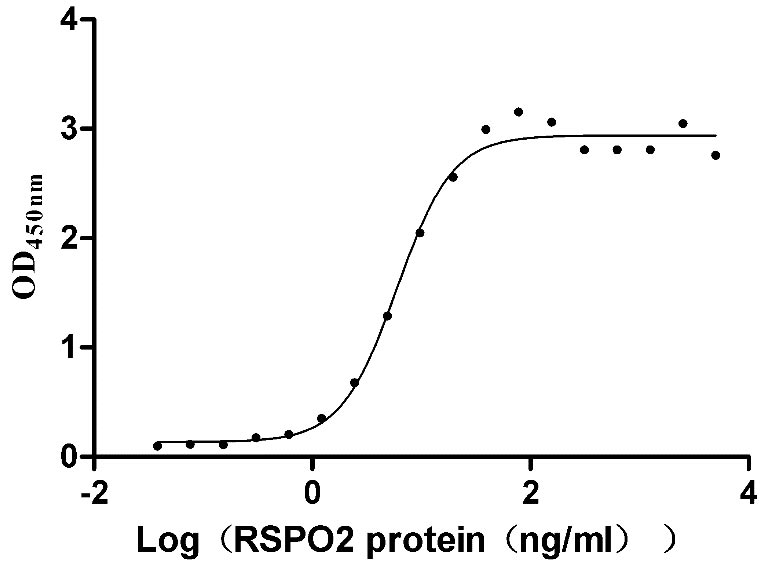
Recombinant Human E3 ubiquitin-protein ligase ZNRF3 (ZNRF3), partial (Active)
Express system: Mammalian cell
Species: Homo sapiens (Human)
-
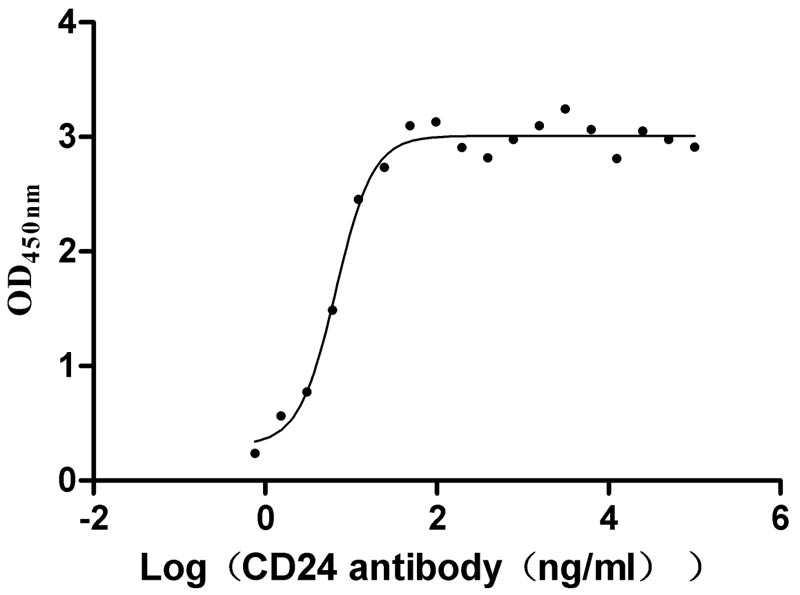
Recombinant Human Signal transducer CD24 (CD24)-Nanoparticle (Active)
Express system: Mammalian cell
Species: Homo sapiens (Human)
-
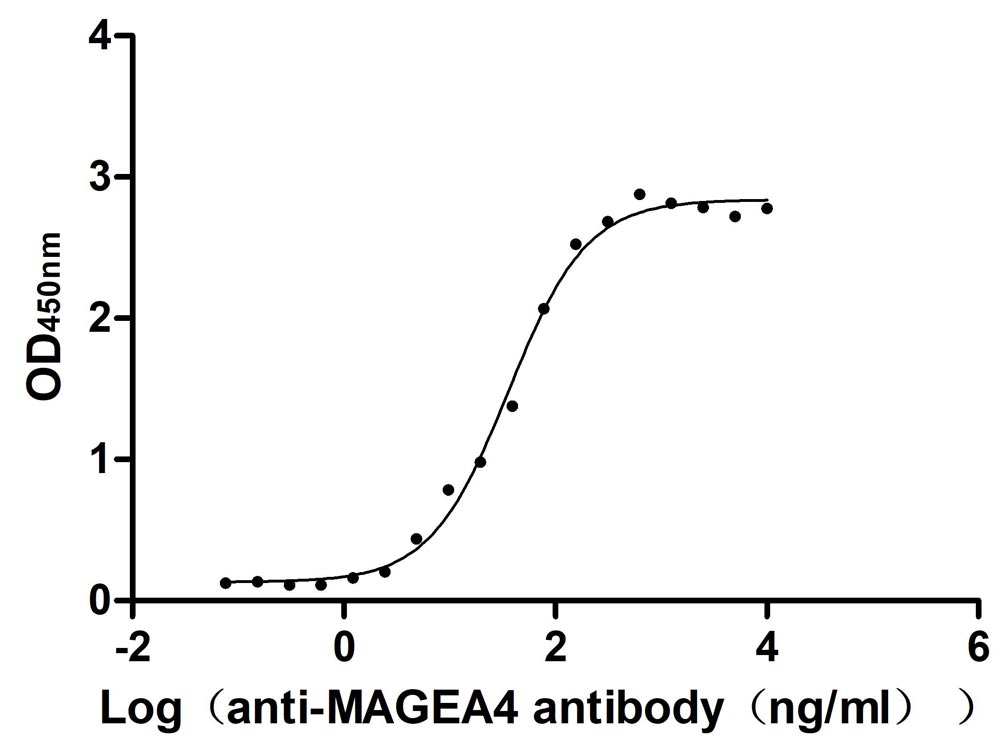
Recombinant Human Melanoma-associated antigen 4 (MAGEA4) (Active)
Express system: Mammalian cell
Species: Homo sapiens (Human)
-
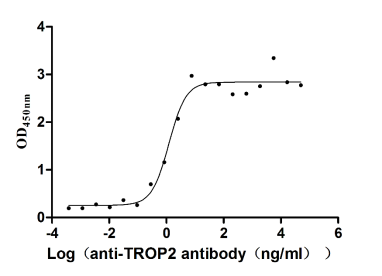
Recombinant Human Tumor-associated calcium signal transducer 2 (TACSTD2), partial (Active)
Express system: Mammalian cell
Species: Homo sapiens (Human)
-
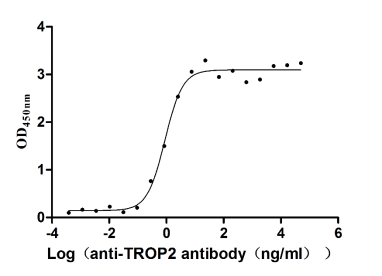
Recombinant Human Tumor-associated calcium signal transducer 2 (TACSTD2), partial (Active)
Express system: Mammalian cell
Species: Homo sapiens (Human)
-
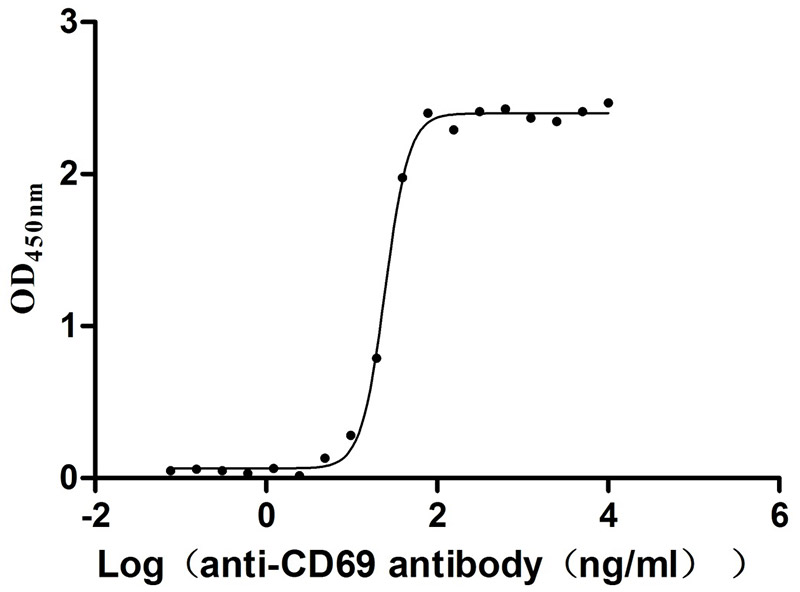
Recombinant Human Early activation antigen CD69 (CD69), partial (Active)
Express system: Mammalian cell
Species: Homo sapiens (Human)
-
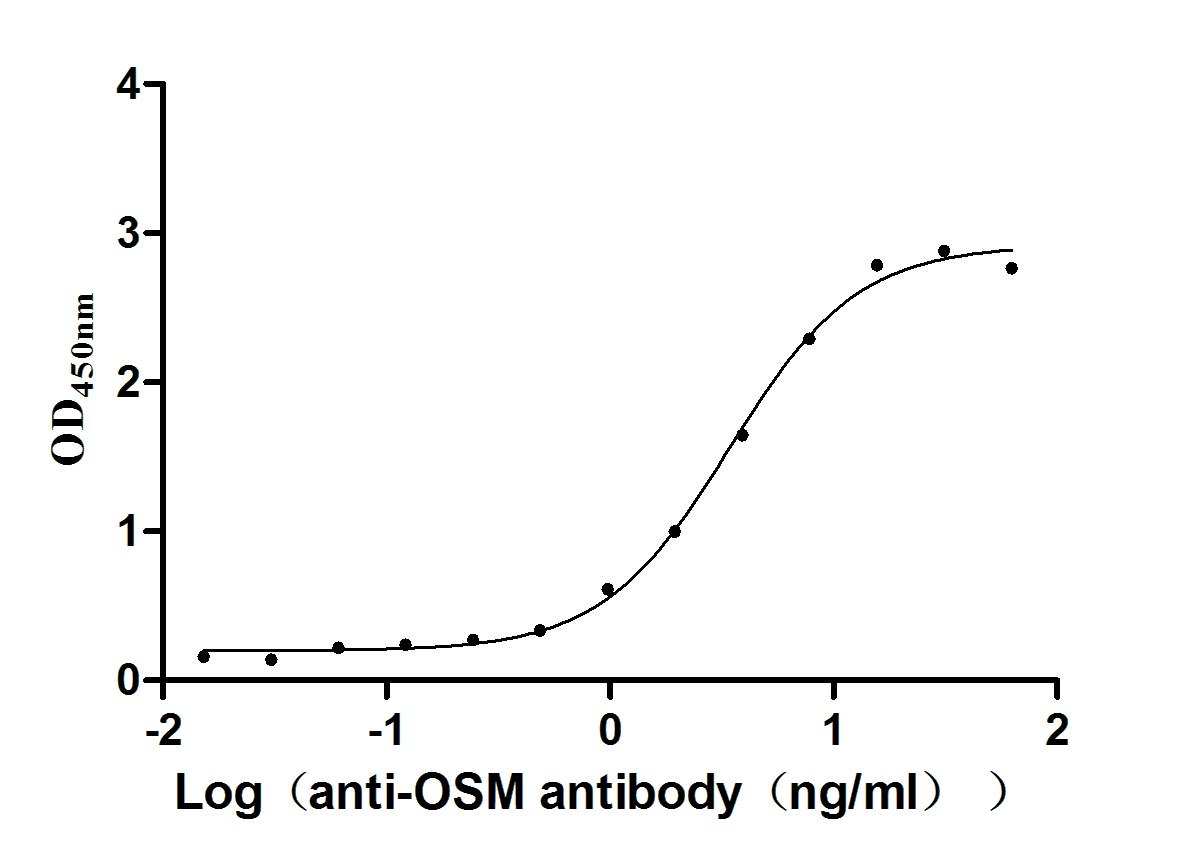
Recombinant Human Oncostatin-M (OSM), partial (Active)
Express system: Mammalian cell
Species: Homo sapiens (Human)
-
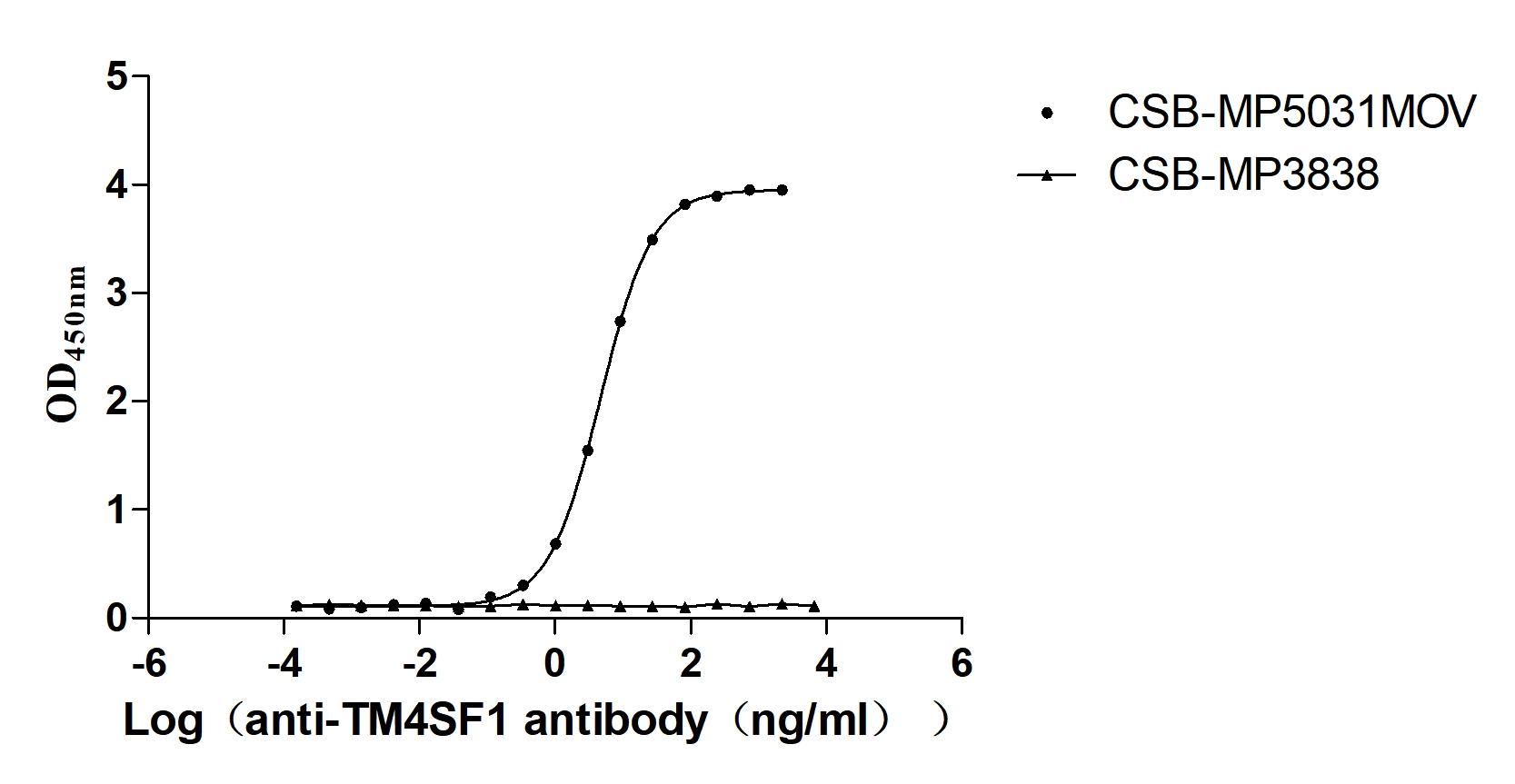
Recombinant Macaca fascicularis Transmembrane 4 L6 family member 1 (TM4SF1)-VLPs (Active)
Express system: Mammalian cell
Species: Macaca fascicularis (Crab-eating macaque) (Cynomolgus monkey)