
Recombinant Mouse Death domain-associated protein 6 (Daxx)
-
中文名稱:Recombinant Mouse Death domain-associated protein 6(Daxx)
-
貨號:CSB-YP006507MO
-
規格:
-
來源:Yeast
-
其他:
-
中文名稱:Recombinant Mouse Death domain-associated protein 6(Daxx)
-
貨號:CSB-EP006507MO
-
規格:
-
來源:E.coli
-
其他:
-
中文名稱:Recombinant Mouse Death domain-associated protein 6(Daxx)
-
貨號:CSB-EP006507MO-B
-
規格:
-
來源:E.coli
-
共軛:Avi-tag Biotinylated
E. coli biotin ligase (BirA) is highly specific in covalently attaching biotin to the 15 amino acid AviTag peptide. This recombinant protein was biotinylated in vivo by AviTag-BirA technology, which method is BriA catalyzes amide linkage between the biotin and the specific lysine of the AviTag.
-
其他:
-
中文名稱:Recombinant Mouse Death domain-associated protein 6(Daxx)
-
貨號:CSB-BP006507MO
-
規格:
-
來源:Baculovirus
-
其他:
-
中文名稱:Recombinant Mouse Death domain-associated protein 6(Daxx)
-
貨號:CSB-MP006507MO
-
規格:
-
來源:Mammalian cell
-
其他:
產品詳情
-
純度:>85% (SDS-PAGE)
-
基因名:
-
Uniprot No.:
-
別名:DaxxDeath domain-associated protein 6; Daxx
-
種屬:Mus musculus (Mouse)
-
蛋白長度:Full length protein
-
表達區域:1-739
-
氨基酸序列MATDDSIIVL DDDDEDEAAA QPGPSNLPPN PASTGPGPGL SQQATGLSEP RVDGGSSNSG SRKCYKLDNE KLFEEFLELC KTETSDHPEV VPFLHKLQQR AQSVFLASAE FCNILSRVLA RSRKRPAKIY VYINELCTVL KAHSIKKKLN LAPAASTTSE ASGPNPPTEP PSDLTNTENT ASEASRTRGS RRQIQRLEQL LALYVAEIRR LQEKELDLSE LDDPDSSYLQ EARLKRKLIR LFGRLCELKD CSSLTGRVIE QRIPYRGTRY PEVNRRIERL INKPGLDTFP DYGDVLRAVE KAATRHSLGL PRQQLQLLAQ DAFRDVGVRL QERRHLDLIY NFGCHLTDDY RPGVDPALSD PTLARRLREN RTLAMNRLDE VISKYAMMQD KTEEGERQKR RARLLGTAPQ PSDPPQASSE SGEGPSGMAS QECPTTSKAE TDDDDDDDDD DDEDNEESEE EEEEEEEEKE ATEDEDEDLE QLQEDQGGDE EEEGGDNEGN ESPTSPSDFF HRRNSEPAEG LRTPEGQQKR GLTETPASPP GASLDPPSTD AESSGEQLLE PLLGDESPVS QLAELEMEAL PEERDISSPR KKSEDSLPTI LENGAAVVTS TSVNGRVSSH TWRDASPPSK RFRKEKKQLG SGLLGNSYIK EPMAQQDSGQ NTSVQPMPSP PLASVASVAD SSTRVDSPSH ELVTSSLCSP SPSLLLQTPQ AQSLRQCIYK TSVATQCDPE EIIVLSDSD
-
蛋白標簽:Tag?type?will?be?determined?during?the?manufacturing?process.
The tag type will be determined during production process. If you have specified tag type, please tell us and we will develop the specified tag preferentially. -
產品提供形式:Lyophilized powder
Note: We will preferentially ship the format that we have in stock, however, if you have any special requirement for the format, please remark your requirement when placing the order, we will prepare according to your demand. -
復溶:We recommend that this vial be briefly centrifuged prior to opening to bring the contents to the bottom. Please reconstitute protein in deionized sterile water to a concentration of 0.1-1.0 mg/mL.We recommend to add 5-50% of glycerol (final concentration) and aliquot for long-term storage at -20℃/-80℃. Our default final concentration of glycerol is 50%. Customers could use it as reference.
-
儲存條件:Store at -20°C/-80°C upon receipt, aliquoting is necessary for mutiple use. Avoid repeated freeze-thaw cycles.
-
保質期:The shelf life is related to many factors, storage state, buffer ingredients, storage temperature and the stability of the protein itself.
Generally, the shelf life of liquid form is 6 months at -20°C/-80°C. The shelf life of lyophilized form is 12 months at -20°C/-80°C. -
貨期:Delivery time may differ from different purchasing way or location, please kindly consult your local distributors for specific delivery time.Note: All of our proteins are default shipped with normal blue ice packs, if you request to ship with dry ice, please communicate with us in advance and extra fees will be charged.
-
注意事項:Repeated freezing and thawing is not recommended. Store working aliquots at 4°C for up to one week.
-
Datasheet :Please contact us to get it.
產品評價

靶點詳情
-
功能:Transcription corepressor known to repress transcriptional potential of several sumoylated transcription factors. Down-regulates basal and activated transcription. Its transcription repressor activity is modulated by recruiting it to subnuclear compartments like the nucleolus or PML/POD/ND10 nuclear bodies through interactions with MCSR1 and PML, respectively. Seems to regulate transcription in PML/POD/ND10 nuclear bodies together with PML and may influence TNFRSF6-dependent apoptosis thereby. Inhibits transcriptional activation of PAX3 and ETS1 through direct protein-protein interactions. Modulates PAX5 activity; the function seems to involve CREBBP. Acts as an adapter protein in a MDM2-DAXX-USP7 complex by regulating the RING-finger E3 ligase MDM2 ubiquitination activity. Under non-stress condition, in association with the deubiquitinating USP7, prevents MDM2 self-ubiquitination and enhances the intrinsic E3 ligase activity of MDM2 towards TP53, thereby promoting TP53 ubiquitination and subsequent proteasomal degradation. Upon DNA damage, its association with MDM2 and USP7 is disrupted, resulting in increased MDM2 autoubiquitination and consequently, MDM2 degradation, which leads to TP53 stabilization. Acts as histone chaperone that facilitates deposition of histone H3.3. Acts as targeting component of the chromatin remodeling complex ATRX:DAXX which has ATP-dependent DNA translocase activity and catalyzes the replication-independent deposition of histone H3.3 in pericentric DNA repeats outside S-phase and telomeres, and the in vitro remodeling of H3.3-containing nucleosomes. Does not affect the ATPase activity of ATRX but alleviates its transcription repression activity. Upon neuronal activation associates with regulatory elements of selected immediate early genes where it promotes deposition of histone H3.3 which may be linked to transcriptional induction of these genes. Required for the recruitment of histone H3.3:H4 dimers to PML-nuclear bodies (PML-NBs); the process is independent of ATRX and facilitated by ASF1A; PML-NBs are suggested to function as regulatory sites for the incorporation of newly synthesized histone H3.3 into chromatin. Proposed to mediate activation of the JNK pathway and apoptosis via MAP3K5 in response to signaling from TNFRSF6 and TGFBR2. Interaction with HSPB1/HSP27 may prevent interaction with TNFRSF6 and MAP3K5 and block DAXX-mediated apoptosis. In contrast, in lymphoid cells JNC activation and TNFRSF6-mediated apoptosis may not involve DAXX. Plays a role as a positive regulator of the heat shock transcription factor HSF1 activity during the stress protein response.
-
基因功能參考文獻:
- DAXX can induce ovarian cancer ascites formation by activating the ERK signal pathway and binding to CEBP-beta. PMID: 30336783
- PML protein organizes heterochromatin domains where it regulates histone H3.3 deposition by ATRX and DAXX. PMID: 28341773
- data support a model in which activation of myogenic differentiation results in PML NB loss, chromatin reorganization and DAXX relocalization, and provides a paradigm for understanding the consequence of PML loss in other cellular contexts, such as during cancer development and progression PMID: 28358373
- This study provides important details regarding the expression and post-translational modifications of DAXX in aging in the entire organism and provides reference data for the deregulation observed in age-associated diseases. PMID: 27465500
- Daxx and Atrx safeguard the genome by silencing repetitive elements when DNA methylation levels are low. PMID: 26340527
- The protein levels of Daxx is reduced in Stella-null oocytes and embryos. PMID: 26325466
- Daxx selectively represses IL-6 transcription through HDAC1-mediated histone deacetylation PMID: 24550390
- Overall, these data imply a regulatory role for Daxx in reovirus-induced apoptosis, depending on its location in the nucleus or cytoplasm. PMID: 23302889
- phosphorylation of Daxx by RIP3 comprises an important part of ischemic necrosis in rat retinal ganglion cells PMID: 23260419
- DAXX is associated with regulatory regions of selected activity-regulated genes, where it promotes H3.3 loading upon membrane depolarization. DAXX loss not only affects H3.3 deposition but also impairs transcriptional induction of these genes. PMID: 22500635
- Neither Daxx nor PML, the main players of ND10-based immunity, are required for the block to viral gene expression in the S/G2 phase. PMID: 21832009
- HIRA interacts with H3.3/H4 in the absence of Daxx. PMID: 21047901
- Both Daxx and macrophage Ste20-like kinase (MST)1 are key mediators of microglial cell death induced by the proinflammatory cytokine interferon (IFN)-gamma. PMID: 21572393
- Characterizing the N- and C-terminal Small ubiquitin-like modifier (SUMO)-interacting motifs of the scaffold protein DAXX. PMID: 21383010
- Using the transcriptional coregulator Daxx as a model, we show that SUMO paralog-selective binding and conjugation are regulated by phosphorylation of the Daxx SUMO-interacting motif (SIM). PMID: 21474068
- suppresses gp130-mediated cell growth and survival by two independent mechanisms: inhibition of STAT3-induced transcription and down-regulation of Bcl2 expression PMID: 21108476
- Daxx functions as an H3.3-specific chaperone and facilitates the deposition of H3.3 at heterochromatin loci in the context of the ATRX-Daxx complex PMID: 20651253
- Overexpressed WT human DJ-1 prevents Daxx translocation and abolishes cytotoxicity in mouse Neuro-2a cells. PMID: 20014998
- The insulin-sensitive glucose transporter, GLUT4, interacts physically with Daxx PMID: 11842083
- Daxx-mediated accumulation of human cytomegalovirus tegument protein pp71 at ND10 facilitates initiation of viral infection at these nuclear domains PMID: 12097584
- IFN-alpha-induced up-regulation and nuclear translocation of Daxx are completely abrogated in the absence of tyk2. PMID: 12391177
- HIPK1 and Daxx collaborate in regulating transcription. PMID: 12529400
- role in enhancing Fas-mediated apoptosis in a murine pro-B cell line, BAF3 PMID: 12681512
- Limitin suppresses B-cell growth through activation of Tyk2, resulting in the up-regulation and nuclear translocation of Daxx PMID: 14662340
- Study provides the novel molecular link between Daxx and DNMT1, which establishes a repressive transcription complex in the cell nucleus. PMID: 14978102
- Daxx and SWI/SNF protein ATRX are regulated by heterochromatin and ND10 during the cell cycle PMID: 15252119
- Mouse T cell lymphoma cells transfected with mutant genes were resistant to apoptosis induced by the anti-Fas antibody, indicating that the missense mutations found in MF were loss-of-function mutations. PMID: 15539917
- Mutant SOD1 mice show increased numbers of positive motoneurons and Daxx nuclear bodies weeks before onset of lateral sclerosis. PMID: 16581901
- Interferon-induced growth suppression of B lymphocytes requires nuclear localization of Daxx through its sumoylation and proper interactions with promyelocytic leukemia protein (PML). PMID: 16818774
- These results provide mechanistic insights into Daxx in SUMO-dependent transcriptional control and subnuclear compartmentalization. PMID: 17081986
- Potential function of Daxx as a c-met repressor during cancer progression. PMID: 17952115
- Daxx participates in myocardial ischemia/reperfusion proapoptotic signaling in vivo. PMID: 18025529
- Daxx recruits DNA methyl transferase 1 (Dnmt1) to target promoters, resulting in synergistic repression. PMID: 18413714
- role in the early apoptotic response to ischemic renal injury PMID: 18480747
- Daxx and GLUT4 interact with JNK1 through D-sites in their NH(2)-(aa 1-501) and large endofacial loop, respectively. Daxx interacts with kinesin KIF5B through the 6xTPR domain of the kinesin light chain. PMID: 18932217
- Daxx overexpression protected the cells from apoptosis, while they were sensitised to cell death following its down-regulation by siRNA. PMID: 19017466
- These studies implicate CHIP as a stress-dependent regulator of Daxx that counters the pro-apoptotic influence of Daxx in the cell. PMID: 19465479
顯示更多
收起更多
-
亞細胞定位:Cytoplasm. Nucleus, nucleoplasm. Nucleus, PML body. Nucleus, nucleolus. Chromosome, centromere.
-
蛋白家族:DAXX family
-
數據庫鏈接:
Most popular with customers
-
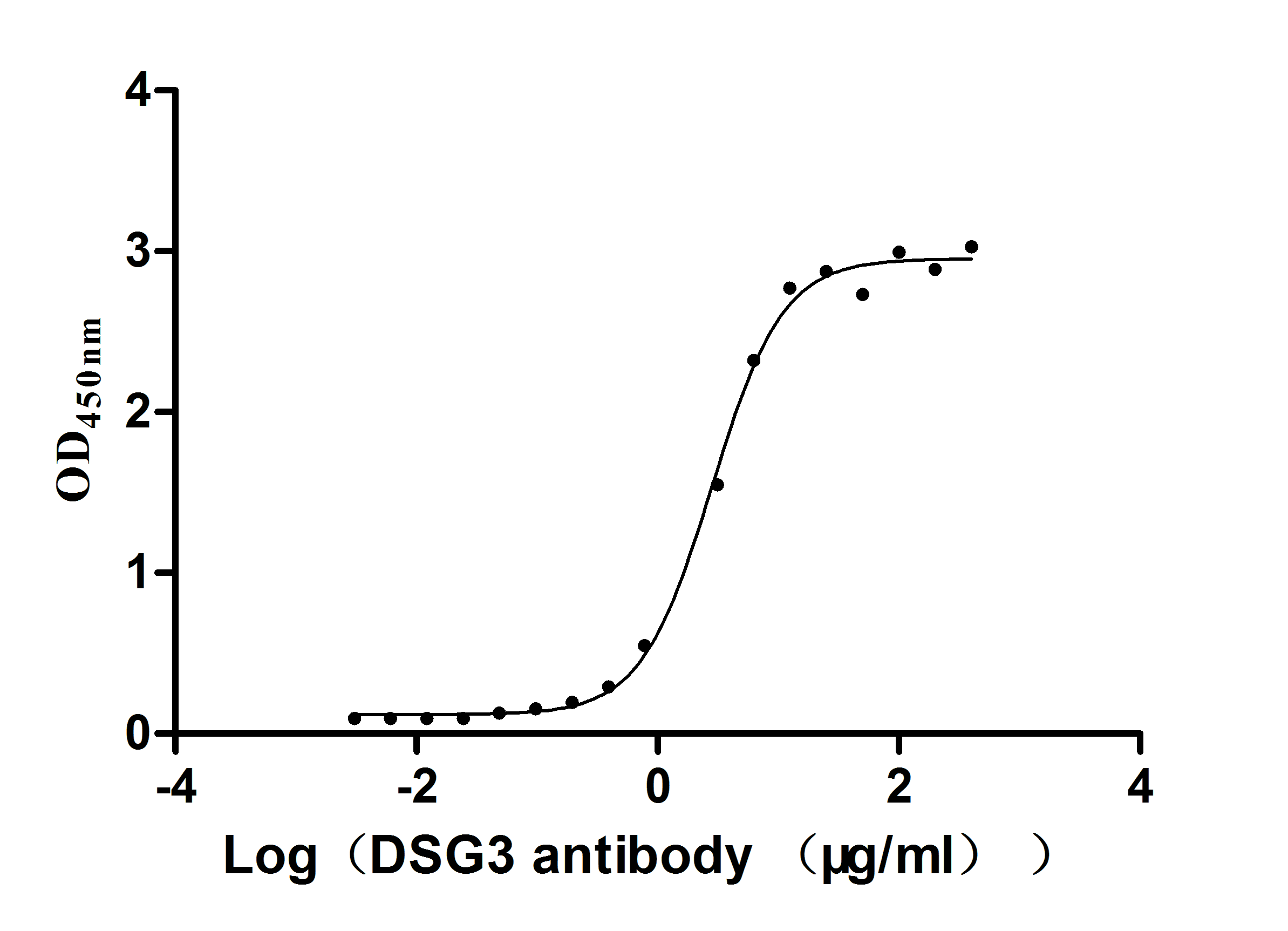
Recombinant Mouse Desmoglein-3 (Dsg3), partial (Active)
Express system: Mammalian cell
Species: Mus musculus (Mouse)
-
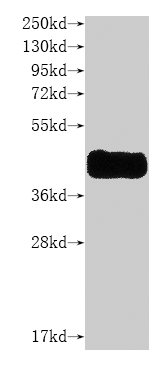
Recombinant Human C-C chemokine receptor type 8 (CCR8)-VLPs (Active)
Express system: Mammalian cell
Species: Homo sapiens (Human)
-
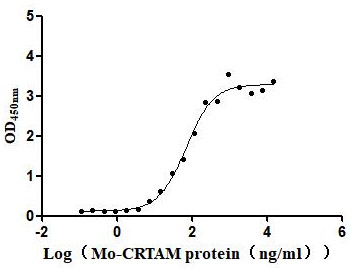
Recombinant Mouse Cell adhesion molecule 1 (Cadm1), partial (Active)
Express system: Mammalian cell
Species: Mus musculus (Mouse)
-
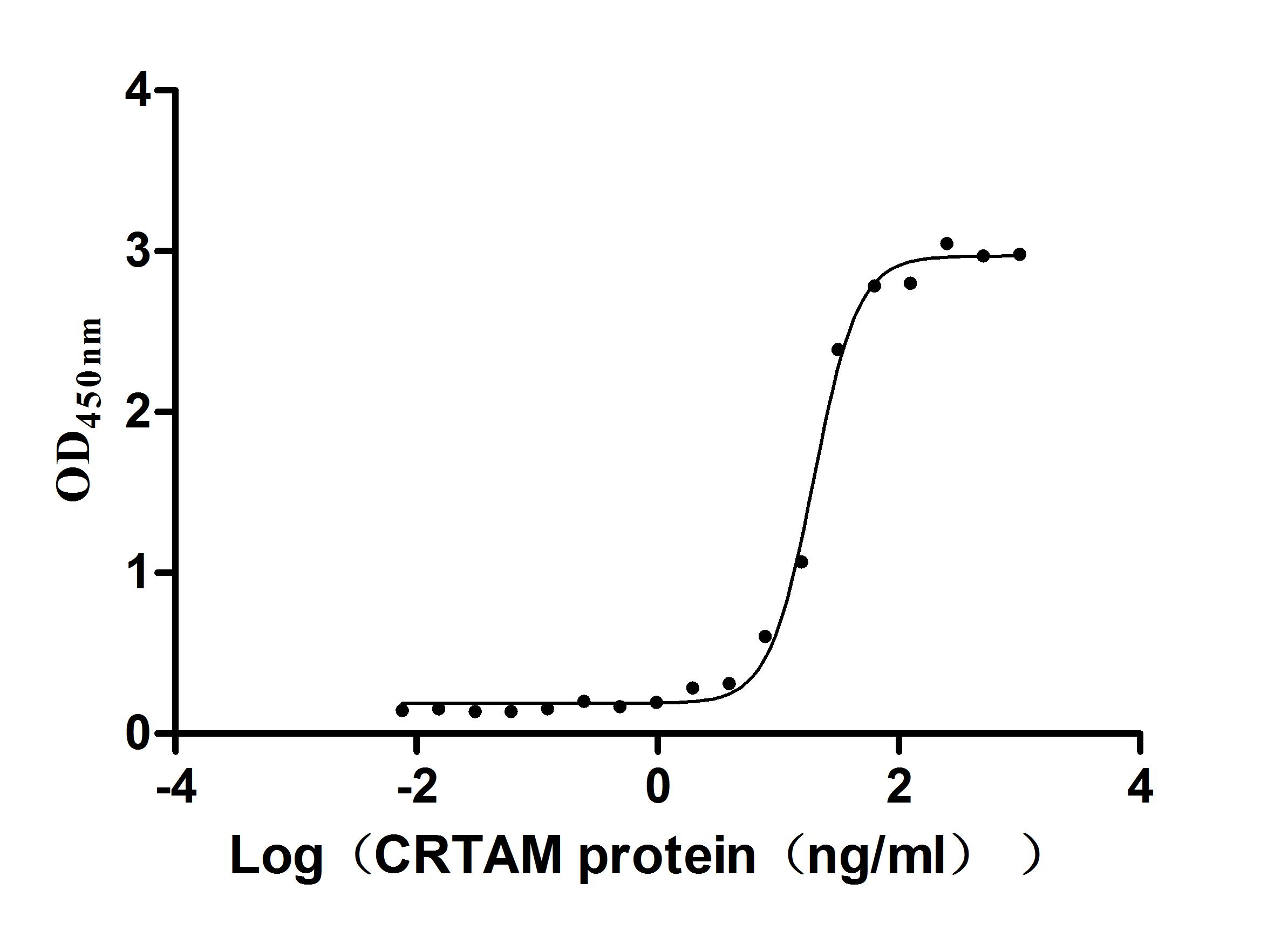
Recombinant Human Cell adhesion molecule 1 (CADM1), partial (Active)
Express system: Mammalian cell
Species: Homo sapiens (Human)
-
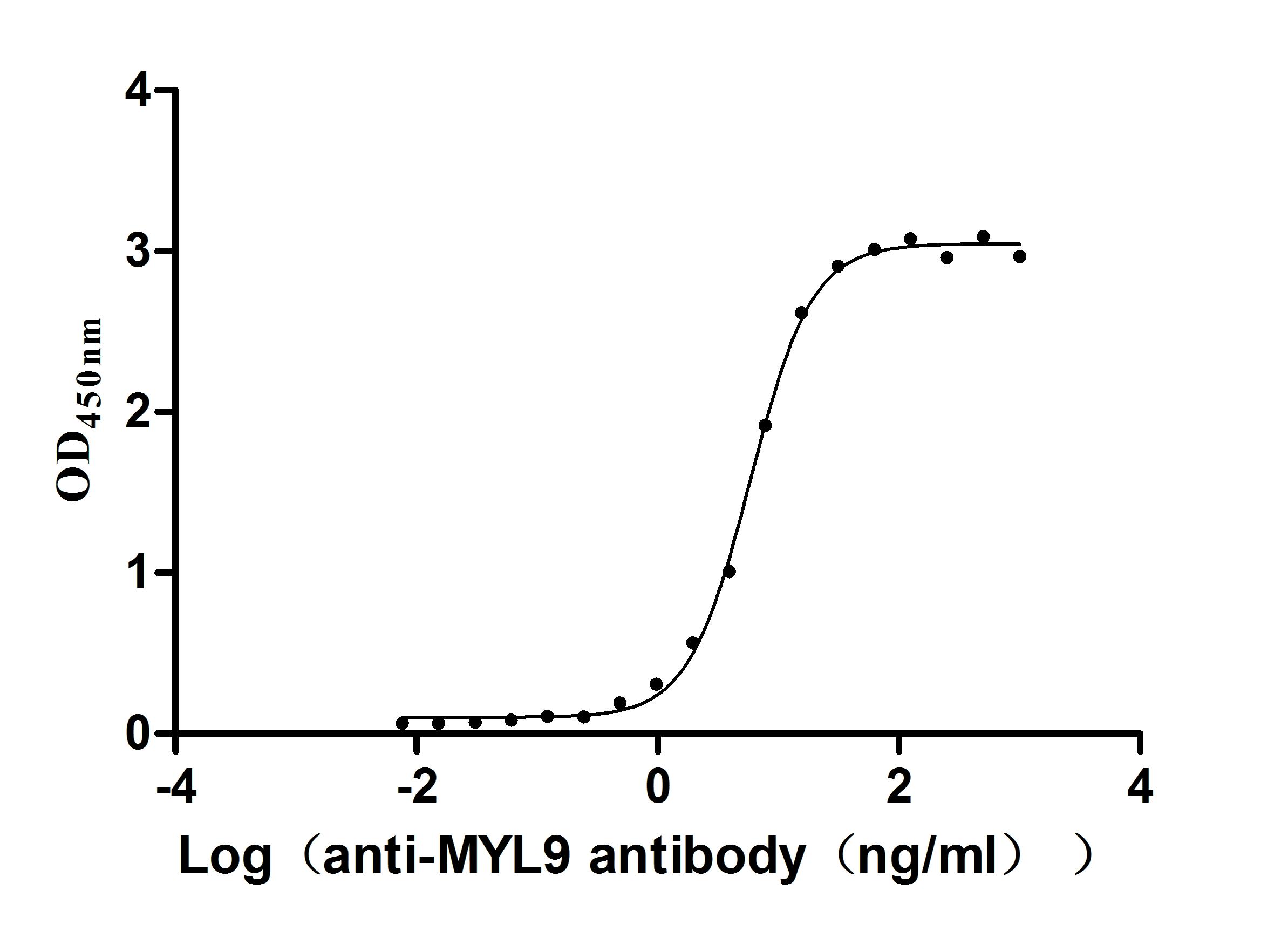
Recombinant Human Myosin regulatory light chain 12A (MYL12A) (Active)
Express system: E.coli
Species: Homo sapiens (Human)